

I went to get a bite to eat Sunday and the key wouldn't turn to "off" and come out of the ignition. It wouldn't turn to start the car either. I made sure the shifter was in P, still didn't work, so I tried it in N as well, still nothing. The steering wheel lock wasn't on so I tried messing with the key, pushing it in slightly, trying to find a hanging point, and nothing. I moved the shifter back and forth to find an "in between" setting to no avail. I took apart the center console and found the shifter interlock cable, saw it was on full loose (tight?) so I unlocked it and played with it, which did nothing. The cable was intact and was moving along with the shifter. I tried setting it to different points in its travel, and still no result from the key. So my wife showed up with some tools and I began to take off the instrument cluster bezel. I had to cut the key trim ring to get it off, bummer. Once it was off I removed the radio, used a small screwdriver on the button on the side of the ignition lock cylinder, and pull it and the immobilizer sensor out of the car. The ignition lock cylinder was stuck in the same place even removed from the car so one of the tumblers must have jammed.
Oddly enough, with the immobilizer sensor removed, the car starts fine when you stick a screwdriver in and actuate the ignition switch manually! Great! I drove straight home and parked the car. Something weird: when I active the locks with the fob, the car no longer honks the horn to verify lock status. I imagine that will go back to normal once everything is back together.
The key was still stuck in the lock cylinder, so I tried to take it apart, but there just wasn't access to any of the internal tumblers, even with the front chrome trim ring removed. So I put it in a vise and smashed the back of it. A few hits broke the tumblers and I got my key out. It was a little mangled but I straightened it and it still works when used in the door lock. At work we make keys etc so I'll copy my spare key and make a new one out of that.
I ordered a replacement lock cylinder today, found a genuine GM one for $82. It comes with a new immobilizer ring but I am betting/hoping I can use the old one and won't have to deal with programming the ring sensor to the car. Programming the keys isn't a big deal, it's all on board, meaning there is no computer program required.
Until then the car is in the garage. I had just purchased a new front suspension setup for my bmw and was planning on doing that this week. Guess not!
Ignition lock cylinder died
-
infinityisfive
- SLE Member

- Posts: 41
- Joined: Sun Mar 24, 2024 10:53 pm
- Year and Trim: 2004 GXP
-
infinityisfive
- SLE Member
- Posts: 41
- Joined: Sun Mar 24, 2024 10:53 pm
- Year and Trim: 2004 GXP
Re: Ignition lock cylinder died
I got the car back together. I got an email from GMparts giant saying that the OEM lock cylinder had been discontinued, so I purchased one on rock auto.
It came disassembled and I had to key it to my car. This isn't difficult, I've done it before with a different car. To start, you take your cut key and put it into the lock cylinder, which then fits into its barrel. There are channels on the inside the only allow the key/cylinder to be removed from the barrel when the key is in a certain position. At the end of the assembly process, there is a lock pin activated by a spring that prevents the cylinder from being removed.
It's pretty easy to code the lock cylinder. You don't need a decode device or anything. The kit comes with new tumblers and springs. The tumblers are the rectangular pieces. They have numbers 1-4 on them, which corresponds to the bitting of the key (the cut). What differentiates one number from another is the size of the hole in the middle of the tumbler, which the key interacts with when inserted, and this is what causes each tumbler to retract inside the cylinder.
In this picture, the brass pieces are the tumblers. If you look closely you can see the rectangular holes in them are different sizes. Some allow the key to move the tumbler in one direction, others move the tumbler the other direction, some allow the key to pass thru. The cylinder is the piece just to the right of the ACC trim ring. You can see the round holes for the tumbler springs and the slots for the tumblers.
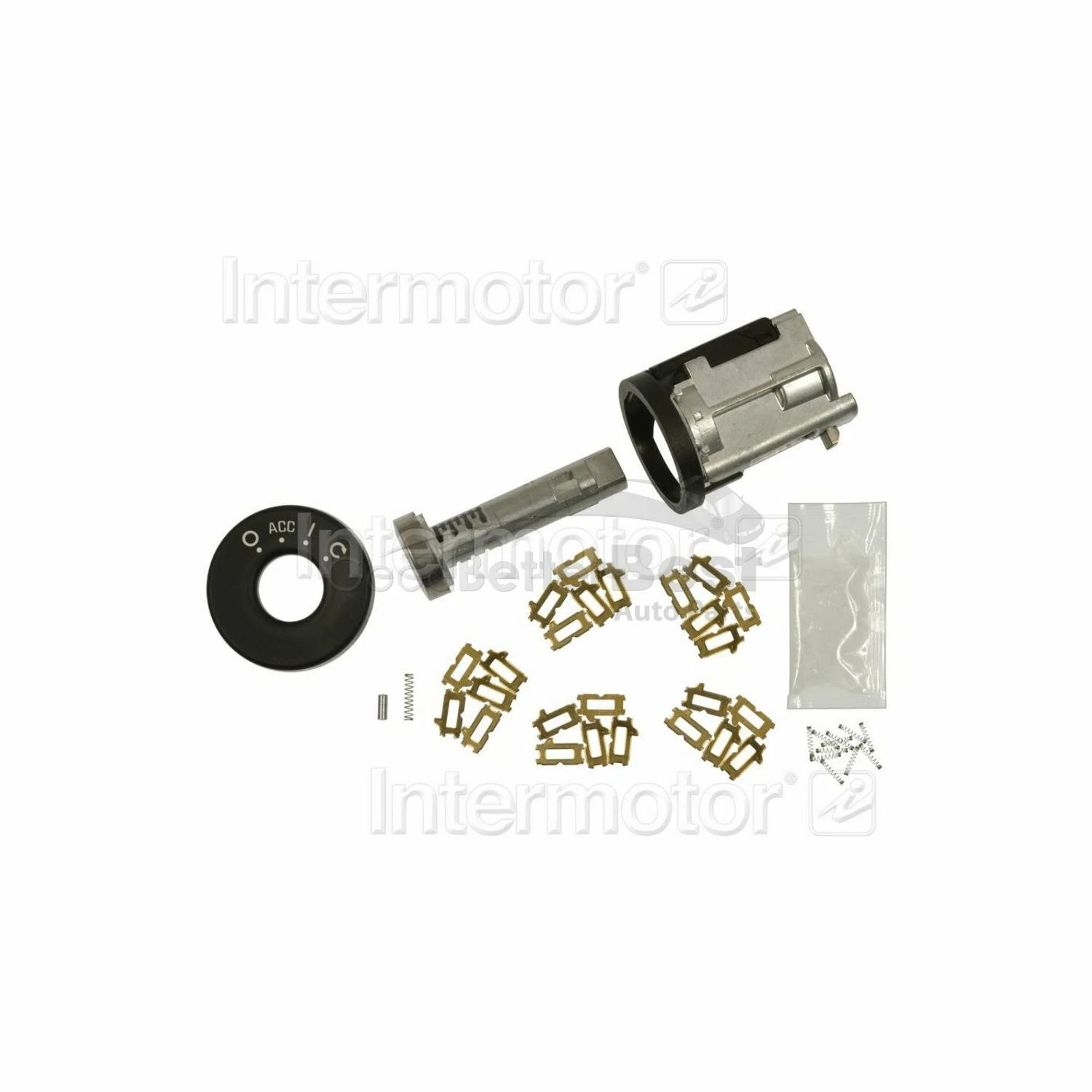
We start with the first tumbler, which is the one closest to the key head. On mine, this was a 3. To figure out which number to use, insert one of the springs in the tumbler spring hole and then pick one of the tumblers and insert it as well. Put the key in all the way and see if the tumbler fully retracts inside the cylinder. If it's sticking out on one side or the other, try a different tumbler and observe how the movement changes. Keep trying different ones until you find one that retracts all the way. To move on to the next one, pull the key out almost all the way, but keep it inserted enough that the tip of the key is still protruding thru the hole in the tumbler. This keeps the tumbler from flying out. Flip the lock cylinder over and repeat the process for the second tumbler.
There are 7 in all. Make sure to always keep the key in the cylinder in order to keep the tumblers in place. Add grease. The grease helps keep them in place as well, but you still have to be careful they don't slip out. Insert the key and cylinder combination into the barrel and test for actuation. It should rotate smoothly. If it doesn't, pull the cylinder out and take a close look. If any of the tumblers aren't completely flush with the surface of the cylinder, the wrong number has been used and it needs to be switched out.
Once you build the cylinder so it rotates freely inside the barrel with no binding, you can insert the lock pin and its retaining spring (to the left of the tumbler in the photo). This likes to shoot out so keep a hold on it until you see it go in the barrel. You'll feel it lock in place and everything is complete!
What I did was take my existing immobilizer ring and install it onto the barrel assembly, then installed that into the car. However, when I opened the door to get in, I noticed none of the lights had come on and the battery was dead. I pulled the batt out and put it on a charger until the next day. After reinstalling the battery, I got into the dash and realized the ignition switch was left on ACC. I tried to turn it to OFF but it wouldn't move that far. I realized the lock cable that connects to the shifter was in such a place to prevent this, so I set it to the middle of its range and the switch began to rotate all the way. After this it was just a matter of offering the lock cylinder up and fiddling it until it was firmly in place and ensuring the immo ring was plugged in as well. I turned the key and it started right up!
I cut two new keys at work, and programming them to the car is as easy as inserting a working master key into the ignition, turning it to ON (don't start the car), then remove it and do the same with the new key. Some older GMs were easy like that.
I played with the shifter interlock cable to get it where the key would only come out of the ignition in P or N, and at the same time, the shifter would be able to shift out of P with the key out of the ignition. Installed all the trim and the radio and it all works! I just need to purchase a new trim ring.
It came disassembled and I had to key it to my car. This isn't difficult, I've done it before with a different car. To start, you take your cut key and put it into the lock cylinder, which then fits into its barrel. There are channels on the inside the only allow the key/cylinder to be removed from the barrel when the key is in a certain position. At the end of the assembly process, there is a lock pin activated by a spring that prevents the cylinder from being removed.
It's pretty easy to code the lock cylinder. You don't need a decode device or anything. The kit comes with new tumblers and springs. The tumblers are the rectangular pieces. They have numbers 1-4 on them, which corresponds to the bitting of the key (the cut). What differentiates one number from another is the size of the hole in the middle of the tumbler, which the key interacts with when inserted, and this is what causes each tumbler to retract inside the cylinder.
In this picture, the brass pieces are the tumblers. If you look closely you can see the rectangular holes in them are different sizes. Some allow the key to move the tumbler in one direction, others move the tumbler the other direction, some allow the key to pass thru. The cylinder is the piece just to the right of the ACC trim ring. You can see the round holes for the tumbler springs and the slots for the tumblers.
We start with the first tumbler, which is the one closest to the key head. On mine, this was a 3. To figure out which number to use, insert one of the springs in the tumbler spring hole and then pick one of the tumblers and insert it as well. Put the key in all the way and see if the tumbler fully retracts inside the cylinder. If it's sticking out on one side or the other, try a different tumbler and observe how the movement changes. Keep trying different ones until you find one that retracts all the way. To move on to the next one, pull the key out almost all the way, but keep it inserted enough that the tip of the key is still protruding thru the hole in the tumbler. This keeps the tumbler from flying out. Flip the lock cylinder over and repeat the process for the second tumbler.
There are 7 in all. Make sure to always keep the key in the cylinder in order to keep the tumblers in place. Add grease. The grease helps keep them in place as well, but you still have to be careful they don't slip out. Insert the key and cylinder combination into the barrel and test for actuation. It should rotate smoothly. If it doesn't, pull the cylinder out and take a close look. If any of the tumblers aren't completely flush with the surface of the cylinder, the wrong number has been used and it needs to be switched out.
Once you build the cylinder so it rotates freely inside the barrel with no binding, you can insert the lock pin and its retaining spring (to the left of the tumbler in the photo). This likes to shoot out so keep a hold on it until you see it go in the barrel. You'll feel it lock in place and everything is complete!
What I did was take my existing immobilizer ring and install it onto the barrel assembly, then installed that into the car. However, when I opened the door to get in, I noticed none of the lights had come on and the battery was dead. I pulled the batt out and put it on a charger until the next day. After reinstalling the battery, I got into the dash and realized the ignition switch was left on ACC. I tried to turn it to OFF but it wouldn't move that far. I realized the lock cable that connects to the shifter was in such a place to prevent this, so I set it to the middle of its range and the switch began to rotate all the way. After this it was just a matter of offering the lock cylinder up and fiddling it until it was firmly in place and ensuring the immo ring was plugged in as well. I turned the key and it started right up!
I cut two new keys at work, and programming them to the car is as easy as inserting a working master key into the ignition, turning it to ON (don't start the car), then remove it and do the same with the new key. Some older GMs were easy like that.
I played with the shifter interlock cable to get it where the key would only come out of the ignition in P or N, and at the same time, the shifter would be able to shift out of P with the key out of the ignition. Installed all the trim and the radio and it all works! I just need to purchase a new trim ring.