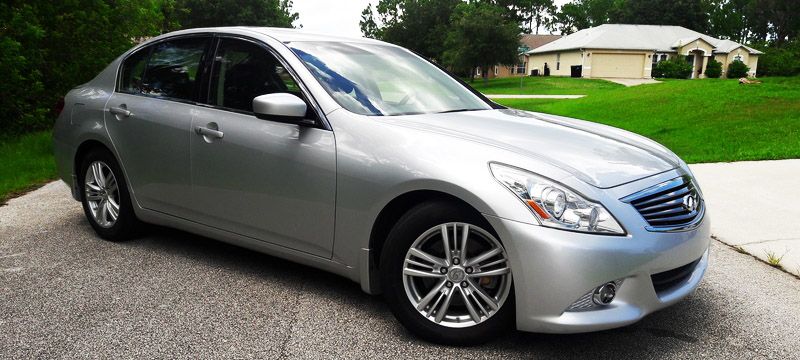
Air lift 60798 Kit link: http://www.amazon.com/gp/product/B000CF ... ge_o00_s00
Tools needed:
19mm/ 3/4" Lug wrench or socket
Jack and jack stands
Vice grips
Razor knife
Needle nose pliers
Tire spoon or long wrench ( dull side)
Spray bottle
Old System Removal
This section assumes that your car is equipped with an air lift setup already, but if you're not removing an old system, you can skip down to the install portion.
Step 1: CHOCK THE FRONT WHEELS BEFORE DOING ANYTHING. Since we're working with the rear wheels, it is a MUST that you block off the front wheels so that they don't move while we're working under the vehicle. If you have an on board air compressor already, disconnect either the power from the air pump, or like me just disconnect the negative battery cable.
Remove the lug nut covers if applicable, and break the lug nuts loose on the rear wheels.

Jack the rear of the vehicle up. I chose the aftermarket trailer hitch as my jack point, as it's structurally sound here, and lifts both sides of the car at once. Once the vehicle is raised, place jack stands at appropriate points to support the rear. Since we don't want the rear suspension to compress, but rather expand, I used the frame to hold the jack stands. This is where a lift would be placed to lift the vehicle, so I had no issues using this spot.

Once the jack stands are placed and you slowly lower the vehicle down, ensure that the vehicle is secure on the jack stands before proceeding. Once verified, continue removing the lug nuts and remove the rear wheels.
Step 2: Now it's time to remove the old air bags from the coil spring. If you look directly underneath the air spring from under the control arm, you'll see how the air line connects to the old spring. The air line is secured by a small clamp that can be removed with needle nose pliers. Once the clamp is slid back, you can pull off the old air line.

If you're planning to re-use your old air lines instead of running new lines, be very careful when removing the old lines from the air spring nipple so you don't damage the line. I chose to run new lines as they came with my kit for peace of mind, and to make sure I don't have any problems with old lines down the road.
Step 3: Here's where things get fun. In my case, I didn't remove the coil spring to remove and install the new air spring. It's not necessary to remove the coil spring, but if you're replacing the struts and springs anyway, it does make it easier to remove and reinstall the air helper springs. Here is what the old springs look like in place.

My old air springs were already rotted and leaking, so I didn't care if they got destroyed during removal. In fact, if you aren't removing the coil springs, it's almost necessary to destroy the old spring to remove it. I used a razor knife to cut the spring in several spots all the way around. I rotated the spring by hand so that I could slice it 360 degrees. This breaks the spring up into sections, so that you can collapse and pull out each section, rather than trying to fight the entire spring to come out.

To pull the sections out of the coil spring, I used a pair of vice grips and a flat head screw driver to pry them out. Once one section of the air bag is out, it makes the other cut sections much easier to remove.
You can clearly see on the old air bag that it was pitted (and leaking at these pits) and dry rotted.

And the old air bag beside the new one.

Repeat this step on both sides of the car to remove the old air bags.
Installing the New Air Springs
Step 1:
Now that the old air bags are out of the way, we can start installing our new air springs. First, remove the cap from the nipple on our new air spring.

Then, compress the spring and flatten it out. I had to use my knees and body weight to keep the air out of the spring. Once flattened, place the black cap back on the nipple to make the air spring hold this flattened shape.

Step 2: Slide the new air spring into the lowest rung on the coil spring. When installing these air springs, the nipple will be facing down towards the ground, and it will come out of the bottom of the control arm. Make sure you install these in the proper orientation.

Now, continue sliding the air spring up into the coil until it's completely inside of the spring. You'll likely need to use a dull object to help pry the air spring into place. A tire spoon works great for this, but I used the back end of a regular wrench to do this (the rounded part).
Step 3: Once you get the air spring full inside the coil spring, insert the new protector that comes in the kit. This goes underneath the air spring, and the nipple goes through the center hole.


My old protectors were in terrible shape, with lots of cracking and bending, so it's necessary to install the new ones that come with the kit.
Once the protector is in place, you can remove the cap from the air spring nipple. The air bag will slightly inflate and regain its original shape.
Step 4: If you're routing new air lines, whether for an on board compressor or a separate compressor, do so now. I didn't photograph this process, as you may want to run the lines differently for your setup. My air compressor is located in the trunk mounted to the back seat. I routed the lines through pre-existing holes in the trunk, and sealed the holes back with silicone.
Once your air lines are routed, clamp them back onto the nipple of the air spring using the new supplied clips.
Step 5: Once you have all of the air lines plumbed and hooked to the air springs, restore power to the on board compressor (if applicable) and inflate the air springs to around 10psi.

Using a spray bottle of soapy water, spray down the entire air spring and all of the air line connections. You're going to be looking for bubbles at any of the connections. If you don't see any bubbles form, you don't have any leaks. If you DO see bubbles, inspect the area to see what is leaking, and replace what may be necessary (air lines, T fittings, clamps, etc).
Step 6:
Once you determine that you don't have any more leaks, reinstall the wheels, hand tighten the lug nuts, lower the vehicle down, and torque the lug nuts to spec. When weight is back on the suspension, inflate the air bags to the maximum 35 psi and check one final time for leaks.

Then, adjust the pressure in the springs as necessary, or to your comfort level. I've found with driving that 20psi is a good combination of ride quality and performance.
I hope this helps anyone who may have this kit already, or if anyone is looking to install this kit in the future.