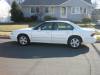
Series I L27 (1992-1994 SE,SLE, SSE) & Series II L36 (1995-1999 SE, SSE, SLE) and common problems for the Series I and II L67 (all supercharged models 92-99) Including Olds 88's, Olds LSS's, Olds 98 91-96, Buick Lesabres and Park Avenue 91-96. Please use General Chat for non-mechanical issues, and Performance and Brainstorming for improvements.
I was to the yearly inspection with by 94 Bonnie SSE, and got a problem. There was a difference in the breaking between the left and right rear drum breaks. Left was 1.4N, and right 0.9N. The difference was bigger than the allowed 30%, so I investigated the breaks. I found out that the drums where nearly finished, and a break cylindar (I hope this is the correct name) was leaking a bit. So I put in new drums, and a new cylindar. The breaks are better now: left 1.9N, right 1.4N. This is ok for the inspection, but it's still a 27% difference! Since it's so close to 30%, I am afraid I might not pass next year. Break pads (hope correct again ) are quite ok.
What might still be the problem? I don't have any break warning lights, and ABS seems(!) to work. Also note that the parking breake is quite ok, with no difference between left and right.
You need to replace the other cylinder, and bleed them again.
The Golden Rule of working on brakes is that you always replace the same things on both sides of an axle. If you have one bad cylinder, you replace them both. That way they're both the same age and spec.
Bye Bye: RIP sandrock
Sirius wrote:Think about it. You’re tooling down the road in your Prius, knowing full-well that this thing being green is as big a sham as federally mandated ethanol-enriched gas, Russia pulling out of Ukraine, and Obamacare.
Make sure the rear brake proportion valve is working properly and that rust is not impeding the brake lines.. And yes, do replace the other wheel cylinder. Also check that all the hardware-springs/self adjuster are in good working condition.
00Beast wrote:You need to replace the other cylinder, and bleed them again.
The Golden Rule of working on brakes is that you always replace the same things on both sides of an axle. If you have one bad cylinder, you replace them both. That way they're both the same age and spec.
You need to replace the other cylinder, and bleed them again.
The Golden Rule of working on brakes is that you always replace the same things on both sides of an axle. If you have one bad cylinder, you replace them both. That way they're both the same age and spec.
reb wrote:Also check that all the hardware-springs/self adjuster are in good working condition.
Better yet, replace all the hardware if you havent already. How was the front brake balance?
Boost addict
The Fleet: '93 SSEi - Twincharged + manual Build thread '97 Camaro - Top swap '05 STS - V8, AWD, her DD '92 Trofeo - Fair weather DD '99 Montana - top swap 3800 '04 Sierra 2500HD - LLY Duramax
The condition of the brake fluid can affect stopping power more greatly than what is realized. If you haven't done so yet I would put new fluid in the whole system. Water accumulates in the brake fluid over time and impedes its effectiveness. The fluid should look like it came out of the jug, clear not brown (it's brown because thats rust water in the fluid).


 ) are quite ok.