

My check engine light is on, with the scangauge showing a P0171. There are no driveability issues, however occasionally the idle is a little off when hot. After looking around on the 'net, it seems like this code is often caused by a vacuum leak, where would be a good place to start troubleshooting?
There is a vacuum-related issue with this car; the A/C programmer behind the glove box has apparently lost it's vacuum source. No matter what mode is selected on the control panel (automatic climate control), air will only blow from the defrost and a little from the floor vents. The vacuum tank under the battery tray seems to be holding, you can hear air rushing in when the hose is disconnected. The lines under the dash all seem to be connected properly as well. Could this also be related to the P0171 code?
The LIM gaskets and the upper plenum have been replaced with the updated parts already, so the leak shouldn't be coming from a failing plenum or gasket?
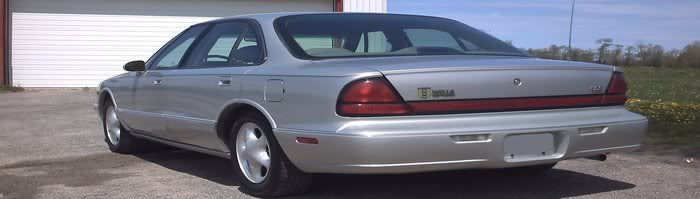
1998 Oldsmobile LSS P0171
-
91NinetyEight
- SLE Member

- Posts: 36
- Joined: Tue Jun 08, 2010 12:50 pm
- Year and Trim: 1998 Oldsmobile LSS
-
00Beast
- Retired Site Developer

- Posts: 20960
- Joined: Tue May 27, 2008 10:30 pm
- Year and Trim: '17 Silverado 1500
- Location: MN/IA
- Contact:
Re: 1998 Oldsmobile LSS P0171
First off, how old is the fuel filter? An old/plugged filter can cause restricted flow to the engine. Start with that, it should probably be done anyways.
Have you looked to make sure the fitting is connected to the firewall where it goes to the HVAC? If that's good, use some carb cleaner and spray the vacuum lines. If the idle improves when you spray an area, there is a leak.
Have you looked to make sure the fitting is connected to the firewall where it goes to the HVAC? If that's good, use some carb cleaner and spray the vacuum lines. If the idle improves when you spray an area, there is a leak.
Bye Bye:

RIP sandrock
RIP sandrock
Sirius wrote:Think about it. You’re tooling down the road in your Prius, knowing full-well that this thing being green is as big a sham as federally mandated ethanol-enriched gas, Russia pulling out of Ukraine, and Obamacare.
-
91NinetyEight
- SLE Member
- Posts: 36
- Joined: Tue Jun 08, 2010 12:50 pm
- Year and Trim: 1998 Oldsmobile LSS
Re: 1998 Oldsmobile LSS P0171
Fuel filter was replaced in July by the previous owner at the same time he replaced the tank.
-
Mechanical Mike

- Retired Gearhead
- Posts: 3606
- Joined: Tue May 20, 2008 4:34 pm
- Year and Trim: 99 SSEi
- Location: Buffalo New York
Re: 1998 Oldsmobile LSS P0171
Check your long & short term fuel trims at idle & again at 2500 rpm. If there high at idle & improve at 2500 then you can be pretty certain its a vacuum leak. Check the MAF readings while you're getting the fuel trims. You can get the readings while in park.
2006 Chevy Monte Carlo SS
-
91NinetyEight
- SLE Member
- Posts: 36
- Joined: Tue Jun 08, 2010 12:50 pm
- Year and Trim: 1998 Oldsmobile LSS
Re: 1998 Oldsmobile LSS P0171
Coolant temp: 86c
Closed Loop
Transaxle in park
826 RPM:
Short Term: 26
Long Term: 16
2464 RPM:
Short Term: 1
Long Term: 16
Closed Loop
Transaxle in park
826 RPM:
Short Term: 26
Long Term: 16
2464 RPM:
Short Term: 1
Long Term: 16
-
Mechanical Mike
- Retired Gearhead
- Posts: 3606
- Joined: Tue May 20, 2008 4:34 pm
- Year and Trim: 99 SSEi
- Location: Buffalo New York
Re: 1998 Oldsmobile LSS P0171
Most likely a vacuum leak. I'd start by finding the vacuum line that goes to the HVAC & plug off the engine side of the line. See if the fuel trims improve.
2006 Chevy Monte Carlo SS
-
91NinetyEight
- SLE Member
- Posts: 36
- Joined: Tue Jun 08, 2010 12:50 pm
- Year and Trim: 1998 Oldsmobile LSS
Re: 1998 Oldsmobile LSS P0171
Found a questionable looking vacuum line, it appears to have been crushed/bent, and the rubber is deteriorating where it was damaged. The line is part of the supply to the vacuum tank under the fender. The damaged section is right after the check valve, near where the line emerges from the wiring harness loom.
I can see this section of line causing the HVAC problems, but could it set the P0171 since the damage is after the check valve? What kind of line should I use to repair this, and should the entire length from the check valve to the vacuum tank be replaced?
I can see this section of line causing the HVAC problems, but could it set the P0171 since the damage is after the check valve? What kind of line should I use to repair this, and should the entire length from the check valve to the vacuum tank be replaced?
-
Mechanical Mike
- Retired Gearhead
- Posts: 3606
- Joined: Tue May 20, 2008 4:34 pm
- Year and Trim: 99 SSEi
- Location: Buffalo New York
Re: 1998 Oldsmobile LSS P0171
That check valve would keep vauum in the reserve tank while the engine is off. So a bad line after the valve would still contrbute to the P0171 code. If the entire line is easy to get at then change the whole thing. If it looks like a pain to change then just change the bad section & see if the fuel trims improve & if the HVAC system starts working.
Last edited by Mechanical Mike on Thu Feb 02, 2012 6:26 pm, edited 1 time in total.
2006 Chevy Monte Carlo SS
Re: 1998 Oldsmobile LSS P0171
(98 LSS)Just fixed the same issue today with the vacuum prob affecting your control problem with upper and lower vents, no center. Its an easy fix...go get 2 feet of 7/64' vacuum line and do this.
Tools you'll need: Razor Knife, a length of 7/64" or 1/8" vacuum hose. (I used 7/64, and I liked the snug fit, 1/8 would slide on easier), a 7mm deep-well socket and/or driver, flat edge screwdriver. May need Philips screwdriver, needle nose pliers
1. Remove passenger side kick panel's 7mm screws and wingnuts.
2. Open glove compartment, disabling rubber stops (on Bonneville, you'll need to remove the door, and the inside compartment which can easily be removed with a Philips screwdriver.
3. Look for the programmer box which will have multi-colored vacuum lines going to it, with a large orange wiring connector nearby. This is the item you're working with.
4. Begin by unplugging the pink vacuum supply line that is connected with a large orange connector to a black vacuum hose which is the vacuum source from the engine compartment. With this unplugged, start the engine and verify you have a strong vacuum at this hose/connector. If you in fact do not have good vacuum supply at this point, you'll need to first start back tracking the line into the engine bay and see where the weak link is. Check your vacuum canister first, make sure the connector isn't leaking (this is located behind the front bumper, at the extreme right front corner, directly under the battery, accessible from underneath the vehicle).
5. If you had to repair the source of vacuum, and have now corrected the source of vacuum inside the dash, re-test to make sure your problem is not already fixed. If you had good vacuum to start with, continue to step 6.
6. Locate the large rectangle connector going to the programmer box, pinch it's protruding tabs, and pull straight out. It may be stubborn, but make sure to be careful since we're dealing with a brittle plastic case that it's attached to. Now, feel up to the top of the programmer box, and disconnect the small motor control plug by depressing it's one protruding tab. Once you've got those both out, look toward the bottom of the programmer box and locate a white arm that is connected to a metal rod. You'll need to disconnect the arm from the rod, which should pop off the side of it, or you'll need to remove the plastic clip from the arm by pinching the tabs together with a set of needle nose pliers. Drop the arm down and it will slide out of its place at the programmer. Next you'll need to remove the vacuum line connector from the box. One 7mm nut will need to be removed with a deep well socket, and the connector will pull straight out. Now remove the visible mounting screws, and the box should pull straight forward and tilt out through the glove box opening (mind the different wiring harnesses in the area, making sure not to pull on anything too hard.) The Pontiac dash will only allow you to bring it out through the bottom if I remember correctly, which should still be very possible once you're used to working like you have been for the past few minutes.
7. Now that you've got the programmer out, go to a good work area with your razor knife, vacuum line and flat edge screwdriver. Pry open the box cover from the edge with the orange connector and vacuum lines. Be extremely careful with the tabs. Be mindful of the additional two tabs that will need disabling at the vacuum connector and the opposite side near the smaller electrical connector. A small flat edge may come in handy here.
8. Viewing inside the box, you'll see a set of vacuum lines going to their respective control servos. Remove the black male connector at the box edge from its clip, and cut the vacuum lines as close as possible to the black connector. Now, slide the long clear vacuum manifold from the control servos (this will make it easier to work with, being the length of the remaining lines is short.) and take it out of the box. Cut 5 sections of 3-4" vacuum line and begin fitting them to each color of line where you just cut the black connector off. If you're using 7/64" hose, it's going to be a snug fit.
9. Take your programmer box, lid, razor knife and newly fitted vacuum line set and go back to the car. Now, go to the clear female vacuum connector that once connected to the black box, and cut the lines as close to the connector as possible. In some cases, the colors internal to the programmer, and external that run to the air distributor will be different. Take your now individual connectors and put them back together. This will easily tell you what color lines will go together. Connect all the lines to the new vacuum hose, matching the colors as the connector would. Make sure all the lines go into the hose at LEAST 3/4" to ensure good seal, and that they won't pull out if yanked on for any reason.
10. Now slip the long clear vacuum manifold back onto the male servo connectors, making sure to seat them fully and evenly. Without pulling on any part of the vacuum lines, route them back to the same hole where the connector once sat, and re-install the lid onto the programmer box. Begin fitting the box back into its installation location in the dash. Make sure to seat the locating tabs on the back edge of the box first, then install the screws. Installation is reverse of removal. 2 electrical plugs, one white arm going to the metal rod and all vacuum lines should be double checked for security in the vacuum hose connection. Don't forget the pink hose that goes up to the vacuum supply!
11. Once all connections are verified, before installing glove box and kick panel, start the car, and check the function of the vents. At this point, if all went well, assuming there are no additional issues with the system, you should have full vent mode function! Keep in mind that the programmer was reset by being unplugged, and may take up to 30 seconds to fully answer to a mode command.
12. If all is successful, install your glove box back, as well as the kick panel, and you're good to go!
Total project time with a Buick, 45 minutes-1 hour. Time may vary with the Pontiac dashboard.

Tools you'll need: Razor Knife, a length of 7/64" or 1/8" vacuum hose. (I used 7/64, and I liked the snug fit, 1/8 would slide on easier), a 7mm deep-well socket and/or driver, flat edge screwdriver. May need Philips screwdriver, needle nose pliers
1. Remove passenger side kick panel's 7mm screws and wingnuts.
2. Open glove compartment, disabling rubber stops (on Bonneville, you'll need to remove the door, and the inside compartment which can easily be removed with a Philips screwdriver.
3. Look for the programmer box which will have multi-colored vacuum lines going to it, with a large orange wiring connector nearby. This is the item you're working with.
4. Begin by unplugging the pink vacuum supply line that is connected with a large orange connector to a black vacuum hose which is the vacuum source from the engine compartment. With this unplugged, start the engine and verify you have a strong vacuum at this hose/connector. If you in fact do not have good vacuum supply at this point, you'll need to first start back tracking the line into the engine bay and see where the weak link is. Check your vacuum canister first, make sure the connector isn't leaking (this is located behind the front bumper, at the extreme right front corner, directly under the battery, accessible from underneath the vehicle).
5. If you had to repair the source of vacuum, and have now corrected the source of vacuum inside the dash, re-test to make sure your problem is not already fixed. If you had good vacuum to start with, continue to step 6.
6. Locate the large rectangle connector going to the programmer box, pinch it's protruding tabs, and pull straight out. It may be stubborn, but make sure to be careful since we're dealing with a brittle plastic case that it's attached to. Now, feel up to the top of the programmer box, and disconnect the small motor control plug by depressing it's one protruding tab. Once you've got those both out, look toward the bottom of the programmer box and locate a white arm that is connected to a metal rod. You'll need to disconnect the arm from the rod, which should pop off the side of it, or you'll need to remove the plastic clip from the arm by pinching the tabs together with a set of needle nose pliers. Drop the arm down and it will slide out of its place at the programmer. Next you'll need to remove the vacuum line connector from the box. One 7mm nut will need to be removed with a deep well socket, and the connector will pull straight out. Now remove the visible mounting screws, and the box should pull straight forward and tilt out through the glove box opening (mind the different wiring harnesses in the area, making sure not to pull on anything too hard.) The Pontiac dash will only allow you to bring it out through the bottom if I remember correctly, which should still be very possible once you're used to working like you have been for the past few minutes.
7. Now that you've got the programmer out, go to a good work area with your razor knife, vacuum line and flat edge screwdriver. Pry open the box cover from the edge with the orange connector and vacuum lines. Be extremely careful with the tabs. Be mindful of the additional two tabs that will need disabling at the vacuum connector and the opposite side near the smaller electrical connector. A small flat edge may come in handy here.
8. Viewing inside the box, you'll see a set of vacuum lines going to their respective control servos. Remove the black male connector at the box edge from its clip, and cut the vacuum lines as close as possible to the black connector. Now, slide the long clear vacuum manifold from the control servos (this will make it easier to work with, being the length of the remaining lines is short.) and take it out of the box. Cut 5 sections of 3-4" vacuum line and begin fitting them to each color of line where you just cut the black connector off. If you're using 7/64" hose, it's going to be a snug fit.
9. Take your programmer box, lid, razor knife and newly fitted vacuum line set and go back to the car. Now, go to the clear female vacuum connector that once connected to the black box, and cut the lines as close to the connector as possible. In some cases, the colors internal to the programmer, and external that run to the air distributor will be different. Take your now individual connectors and put them back together. This will easily tell you what color lines will go together. Connect all the lines to the new vacuum hose, matching the colors as the connector would. Make sure all the lines go into the hose at LEAST 3/4" to ensure good seal, and that they won't pull out if yanked on for any reason.
10. Now slip the long clear vacuum manifold back onto the male servo connectors, making sure to seat them fully and evenly. Without pulling on any part of the vacuum lines, route them back to the same hole where the connector once sat, and re-install the lid onto the programmer box. Begin fitting the box back into its installation location in the dash. Make sure to seat the locating tabs on the back edge of the box first, then install the screws. Installation is reverse of removal. 2 electrical plugs, one white arm going to the metal rod and all vacuum lines should be double checked for security in the vacuum hose connection. Don't forget the pink hose that goes up to the vacuum supply!
11. Once all connections are verified, before installing glove box and kick panel, start the car, and check the function of the vents. At this point, if all went well, assuming there are no additional issues with the system, you should have full vent mode function! Keep in mind that the programmer was reset by being unplugged, and may take up to 30 seconds to fully answer to a mode command.
12. If all is successful, install your glove box back, as well as the kick panel, and you're good to go!
Total project time with a Buick, 45 minutes-1 hour. Time may vary with the Pontiac dashboard.