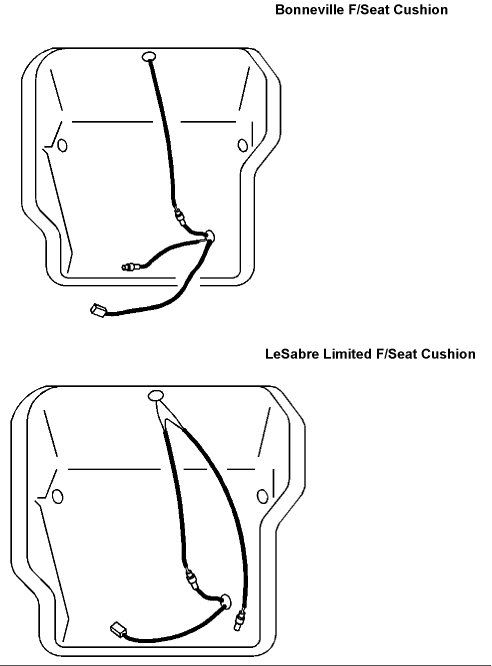
This it the write-up.
The seat heaters in the 2000+ Bonnevilles often quit working after a time. When the switch is depressed, the light comes on for a second or two, and then shuts off. The most common cause for this is an open circuit in one of the seat heaters. It usually opens where the supply wires connect to the heater wires. GM sells replacement seat heaters, but they are relatively expensive, and there have been comments that they don’t get quite as warm. That’s because they are installed under the seat cover’s backing, which contains the original seat heater. This repair is fairly easy to do, and should not take longer than an hour or two. The seat does not have to be removed from the car.
This was a recent repair, so its not known how permanent of a repair it is.
Tools needed for this job are: Soldering gun, solder, solder wick, wire cutters, box cutter, hemostats or similar, and foam type weather stripping.
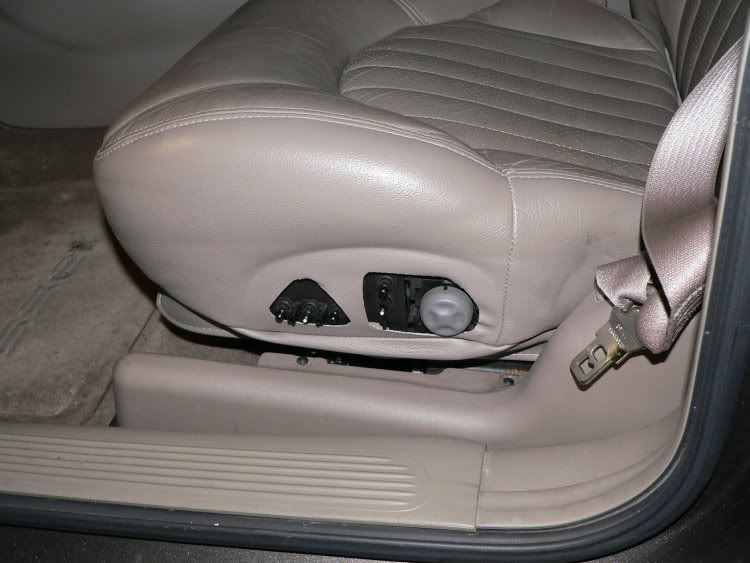
Start by raising the seat up to make things easier to reach. Then remove the covers for the seat switch. The round one does not need to be removed. The others just pry off. Then remove the cover attached to the seat. Slide the cover back, which should release one side of the bottom. Sliding the other direction releases the other side, then pull the bottom out, and slide the top down and off. When you’re done it should look like this.
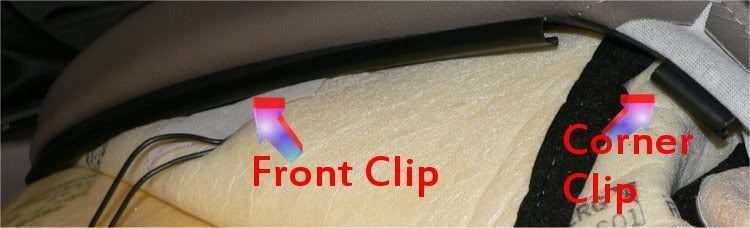
The seat cover is held on with clips that attach to the bottom part of the seat. The long one in the front, and one in the corner are all that have to be removed for this.
With the seat cover pulled back, it will look something like this.
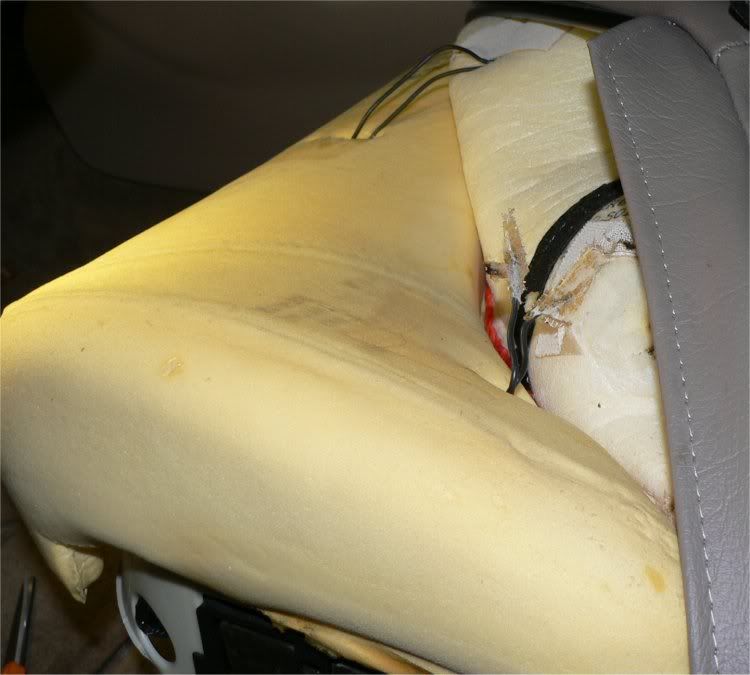
Looking at the underside of the seat cover, there will probably be a melted spot in the cloth type mesh covering the connections.
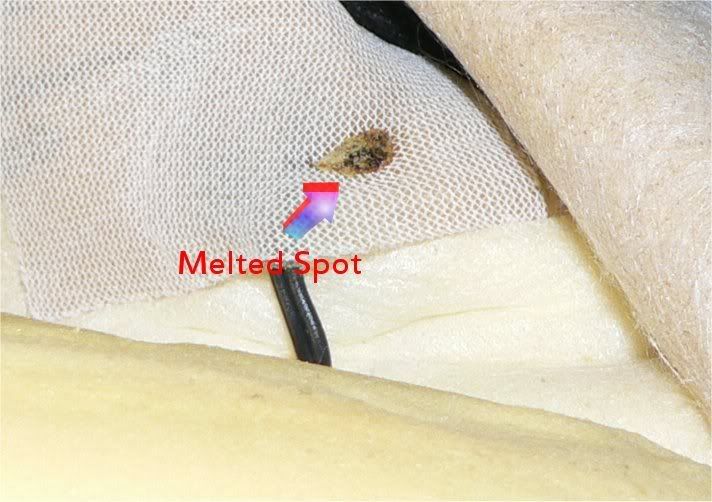
Peeling back that covering will reveal a burned mark in the hard fiberglass type covering that holds the wires and connections in place. This was likely used to try to keep the wires in place, and prevent them from breaking. However, it probably contributes more to the problem, instead of solving it.
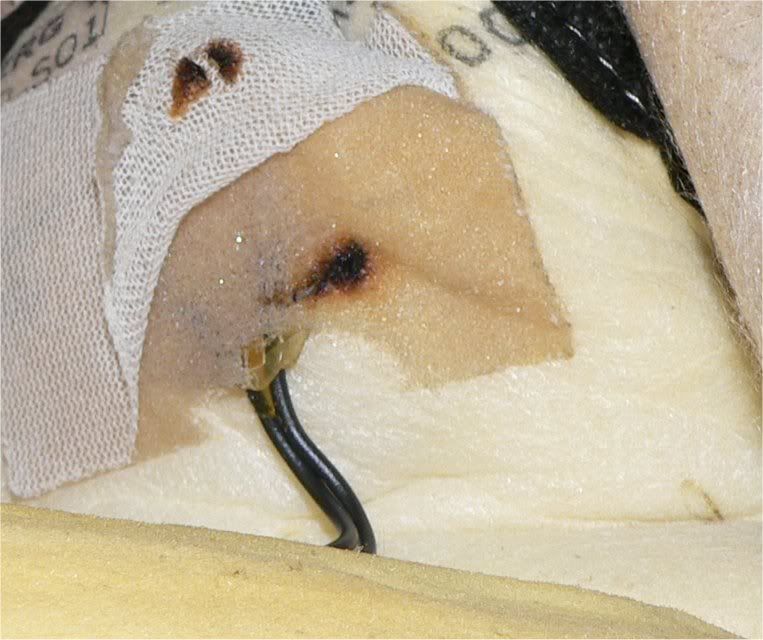
Dig into the seat cover some, until the heater wire that broke off is exposed. The rest of the wiring is still encased in the hard fiberglass type coating.
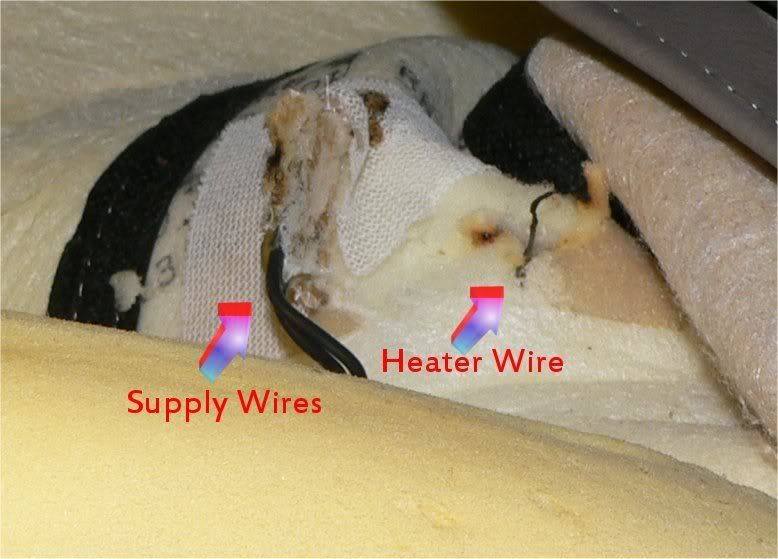
Using some wire cutters, cut between the two wires in the coating. Looking closely at the wire on the left in the picture, the burned spot jutting out to the left side shows where the heater wire at one time was attached.
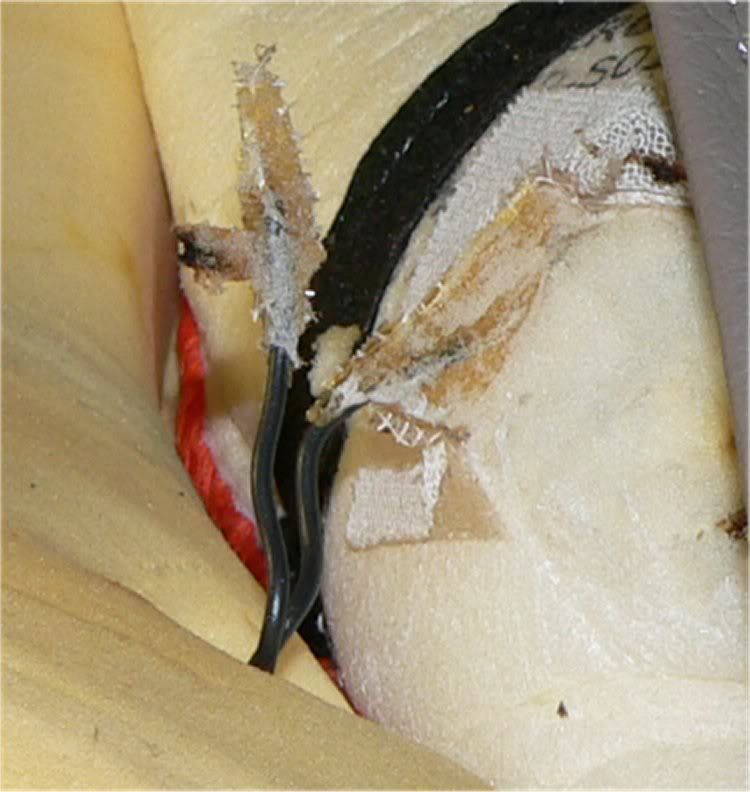
Using the wire cutters, and a box cutter or other sharp blade, clean off the supply wire until the solder covered end is exposed.
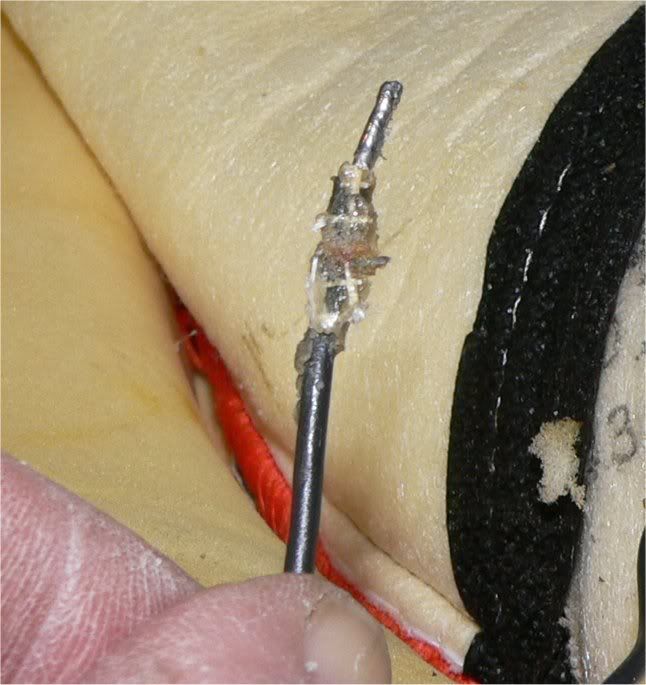
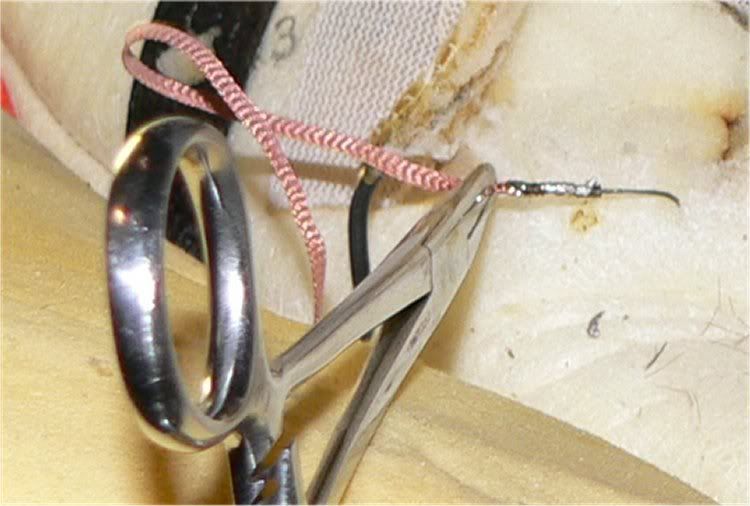
Solder wick was chosen for the repair, because it is flexible, and being made mostly of copper, conducts electricity well. Wrap the end of the solder wick around the supply line’s exposed soldered end. To keep the solder from wicking up the solder wick, a set of hemostats was used as a heat sink right next to the connection. This will keep the rest of the wick flexible.
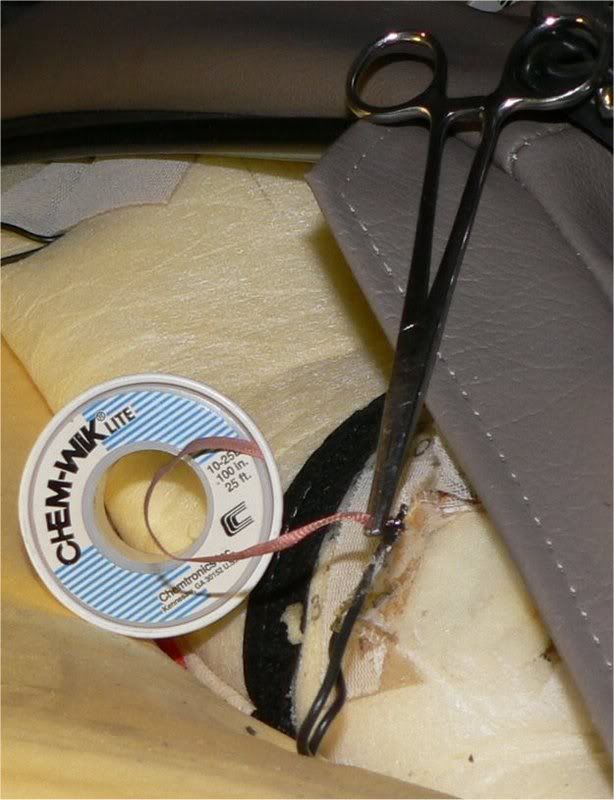
Bend the solder wick down the side of the wire, and then back over itself. This will provide a little extra strain relief. Tape the area tightly.
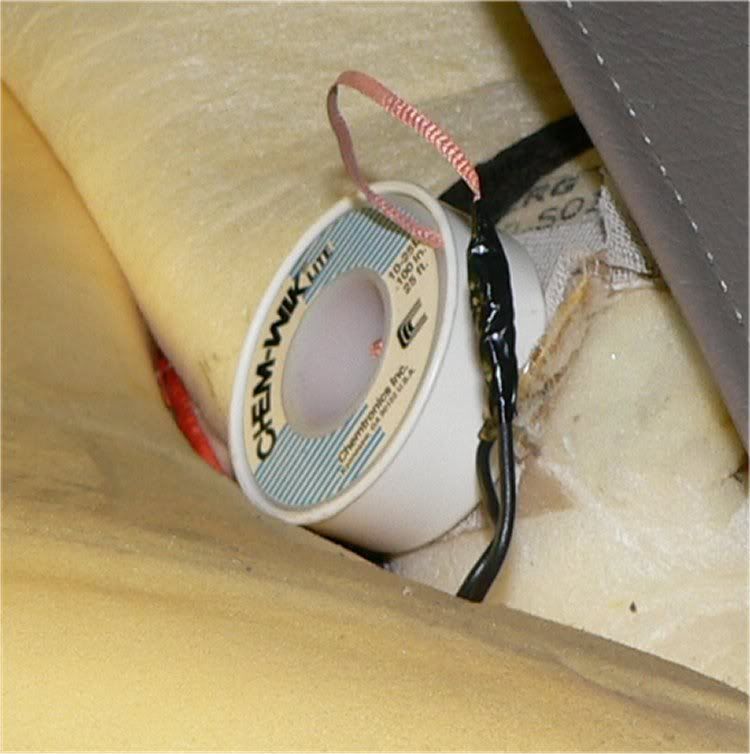
To protect the connection further, push it down inside the hole in the seat cushion.
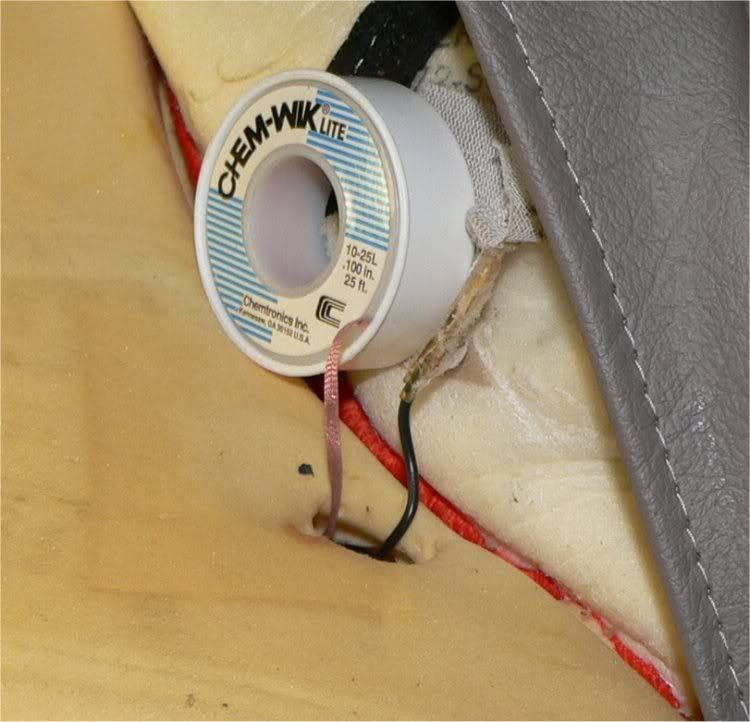
Pull out enough of the solder wick to easily reach the heater wire. Wrap the wick around the heater wire, attach the hemostat next to the connection, and apply solder.
To add protection, apply strips of foam weather stripping to each side of the new wiring.
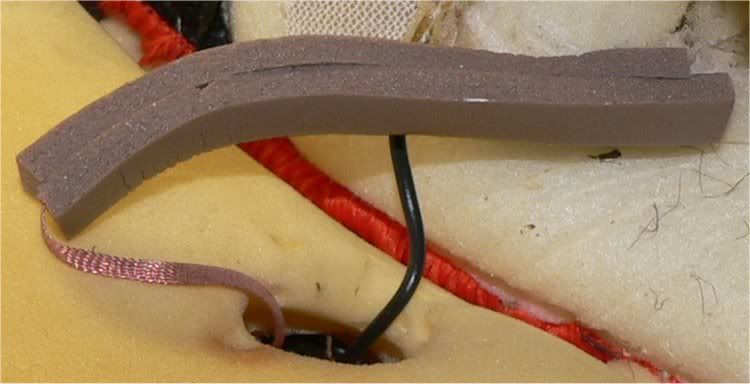
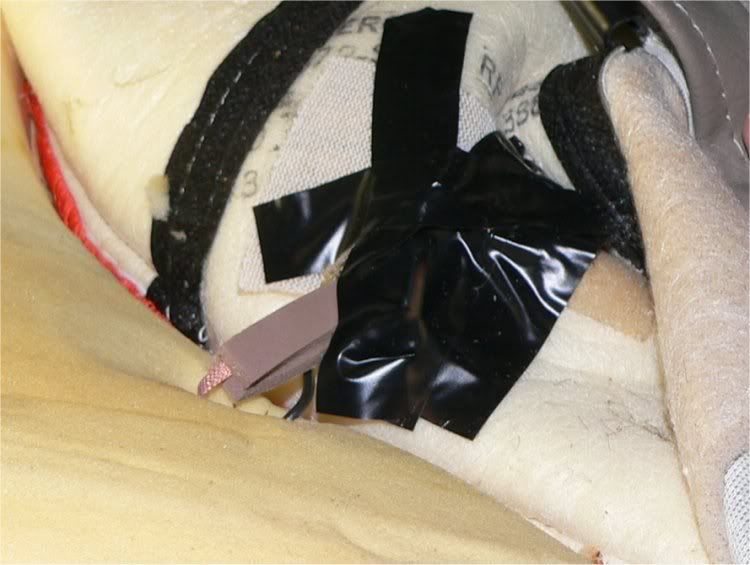
When the heater wire was dug out of the seat backing, it should have left a small hole. Push the end of the foam weather stripping containing the wires into that hole, and tape in place. GM automotive tape was used here, as it holds well. Any similar tape should do fine. It doesn’t have to look pretty, just so it holds it in place. The other end will slide partially into the hole in the seat cushion.
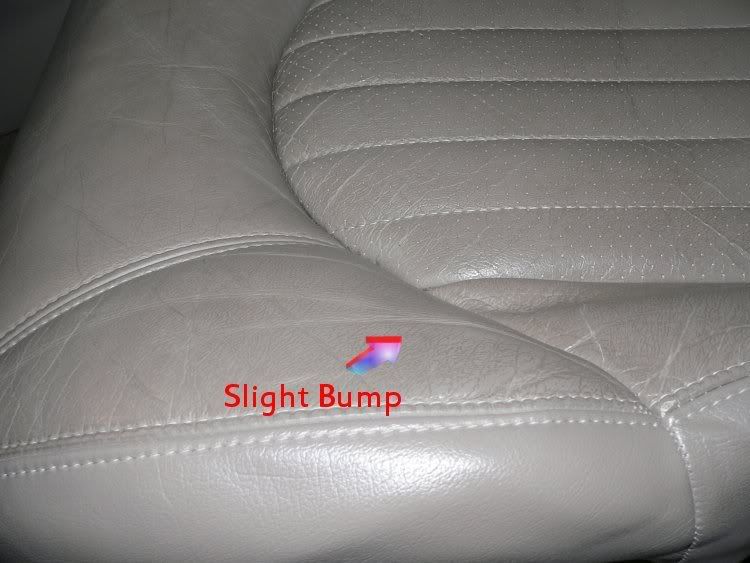
Pull the seat cover back into place, using care not to stress the new connections. Put the clips back on the lower part of the seat, and replace the switch covers. It’s a little hard to see in this picture, but a slight bump may appear in the seat cover. This should soon go away.

](./images/smilies/eusa_wall.gif "Brick wall")