Change L36 accessory (serpentine) belt
Posted: Tue Jun 24, 2008 10:07 am
Change Accessory Belt L36
(Applies to 95-99 L36; 96-99 L67 similar)
Note: This procedure has been revised based on suggestions received in this topic and further testing. The revised version is posted in Techinfo: http://www.pontiacbonnevilleclub.com/fo ... =53&t=2652
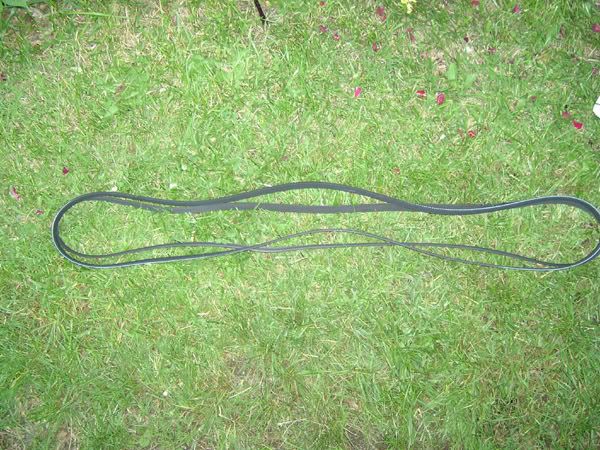
If your accessory belt looks like this or worse:
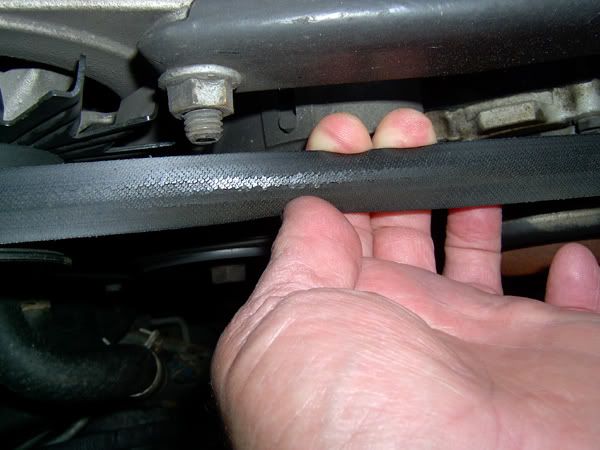
You will need to remove the old belt and install a new one. On most cars, this is a simple job, but on the Series II 3800, there is a spacer that must be removed from the lower bolt on the front motor mount to allow the belt to be removed or installed. Figure on about an hour to get the belt changed if you have never done it before. Probably thirty minutes the second time around.
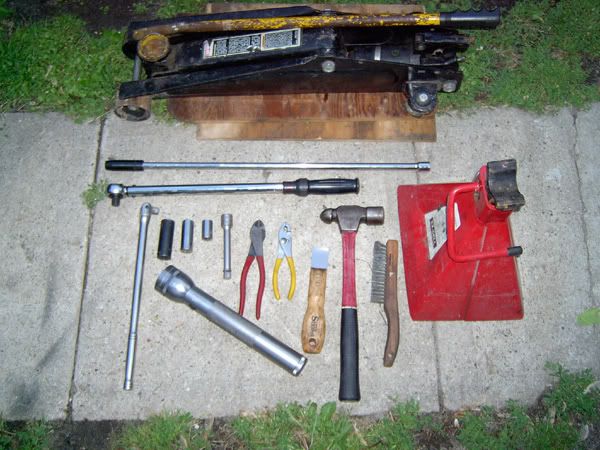
Tools you need to do the job include:
a jack
a jackstand
a piece of 2x4 for oil pan
15mm socket for tensioner
18mm socket for motor mount
19mm (3/4") socket for lug nuts and covers
socket handle
pliers
a 12mm socket with a very long extension or
an appropriately sized piece of pipe
2-4lb hammer
torque wrench for lug nuts
If your wheel and rotor are corroded, you will also need:
a wire brush
a sturdy scraper
The first thing you want to do is make sure you have a belt routing diagram. If you don't have a sticker in your engine compartment, just draw one up by looking at the belt on the engine and store it in a convenient place where you will not be likely to lose it.
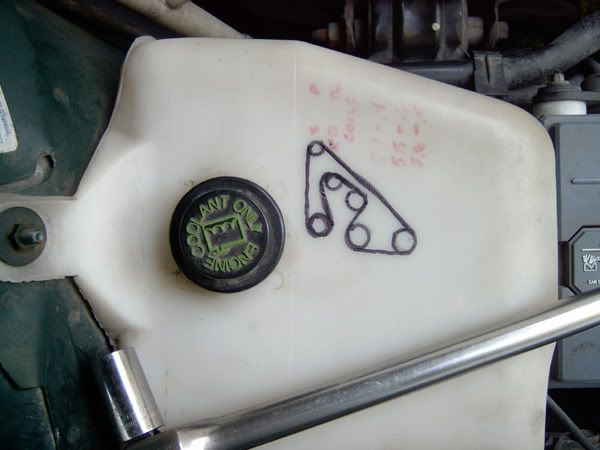
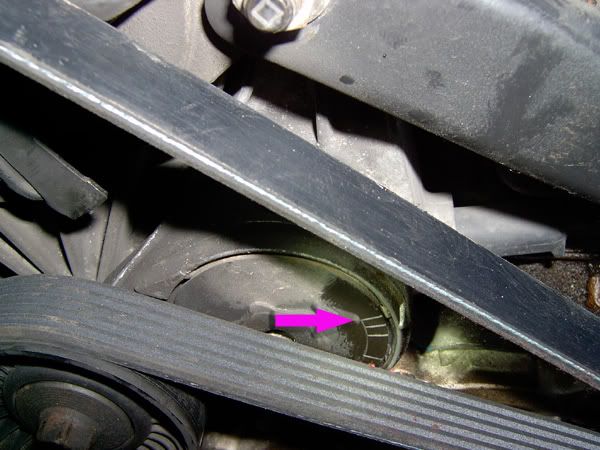
Loosen the old belt by placing a 15mm wrench on the tensioner bolt (big arrow) It helps to have a nice long handle to provide some leverage. Note the position of the tension indicator (little arrow).
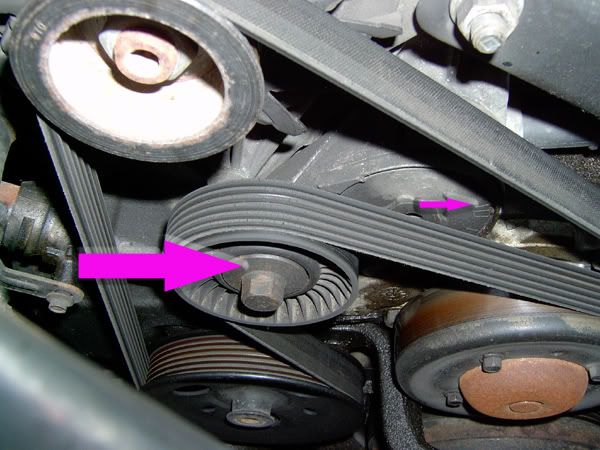
Turn the wrench counter-clockwise to remove tension on the belt...
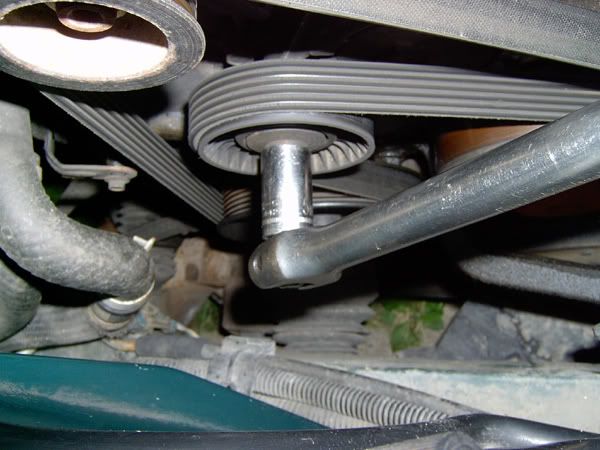
then just slip the belt off the alternator pulley.
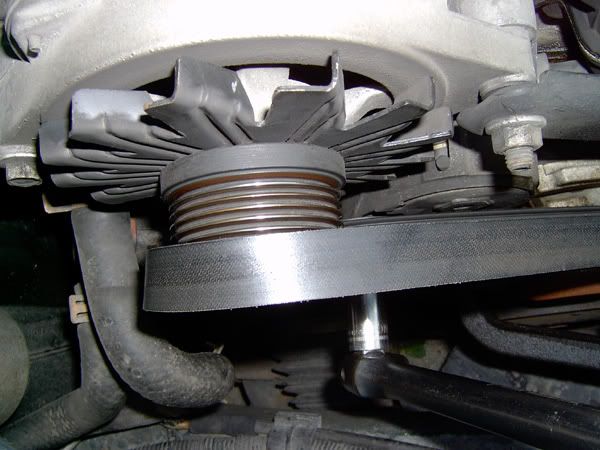
Now, remove the lug nut covers if your wheels have 'em. I need a 3/4" wrench for mine.
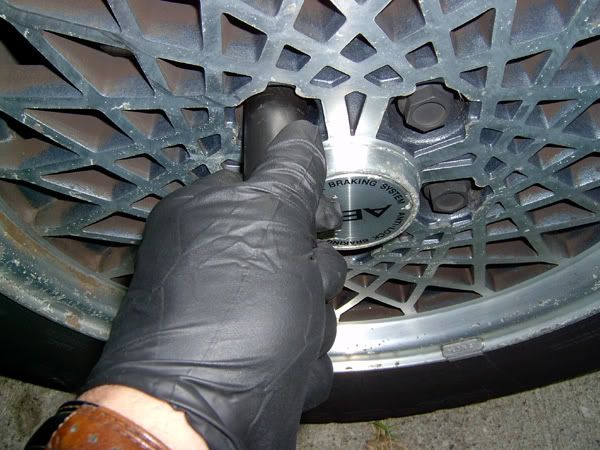
Then loosen the lug nuts.
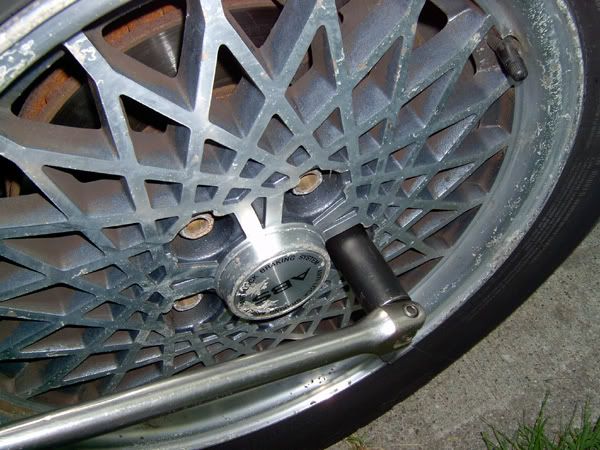
Now jack up the car...
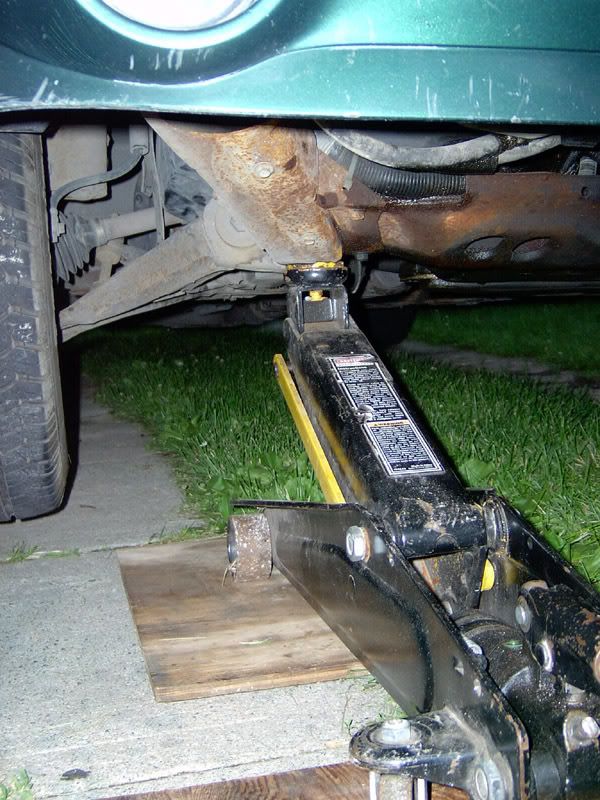
and support it safely. Then remove the wheel.
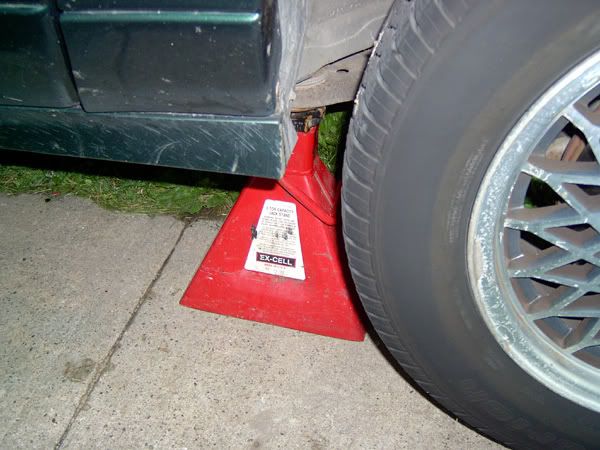
Use pliers or side cutters carefully to pull out the center button on the 3 plastic retainers for the engine shield.
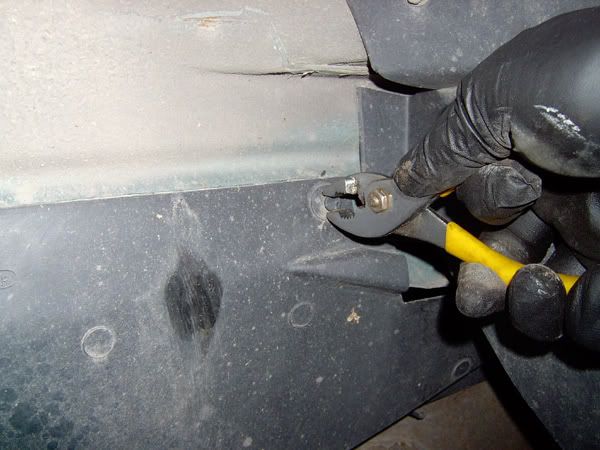
Don't miss this retainer up under the front of the fender.
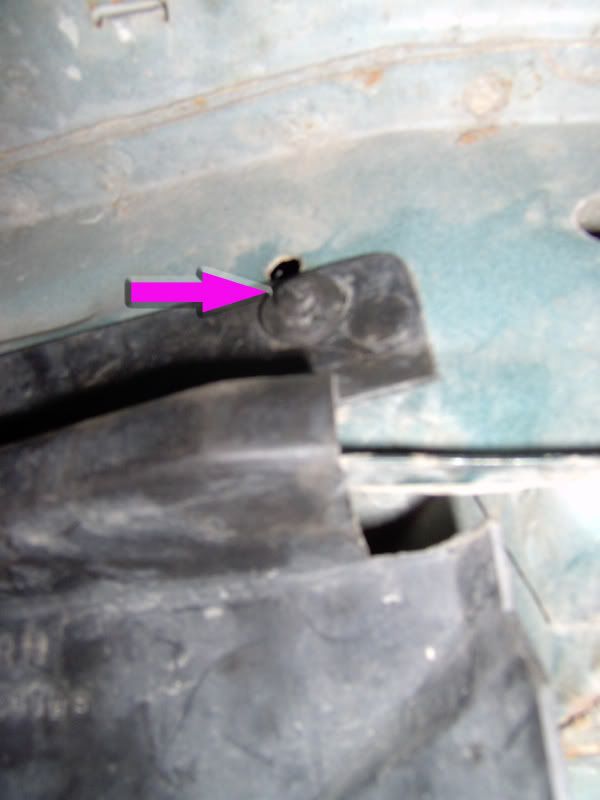
Swing the engine shield out of the way. This will expose the stud that must be removed to slip out the spacer allowing you to remove and install the belt.
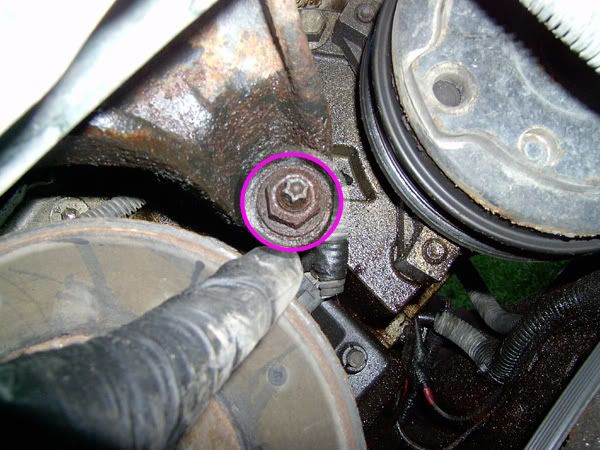
On my car, the stud is secured by an 18mm nut rusted tightly to the stud. If your nut comes off leaving the stud in the block, you will need the external torx socket to remove the stud. However, don't remove the stud until....
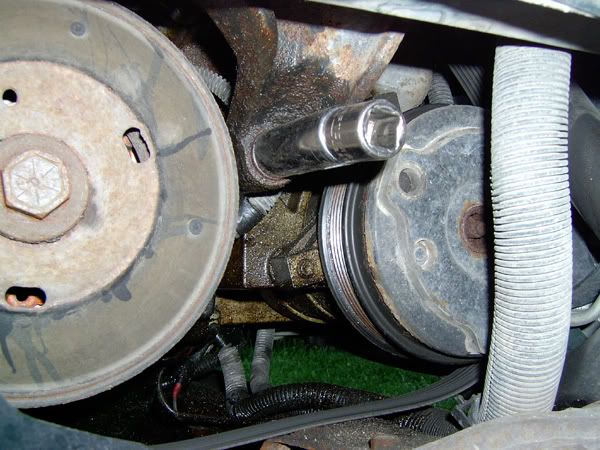
you have supported the engine with a jack. Use a piece of 2x4 on the jack pad so you don't dent the oil pan. Just bring the jack up snug. Then remove the stud. This will free the spacer. Wiggle the spacer up as far as it will go, then jerk it out lifting the outer end. With the spacer out, you can pull out the old belt.
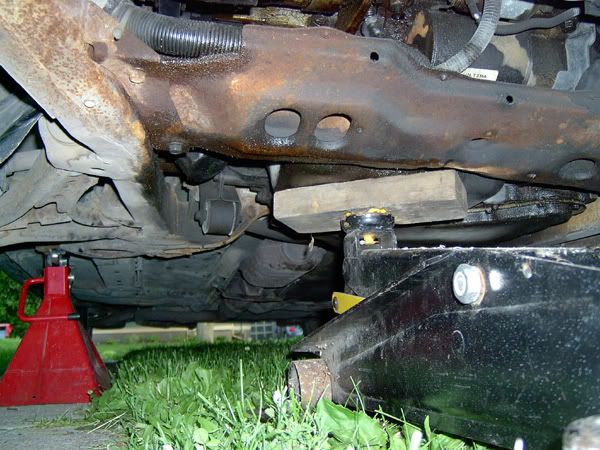
Here is another photo of the spacer with the engine on a stand.
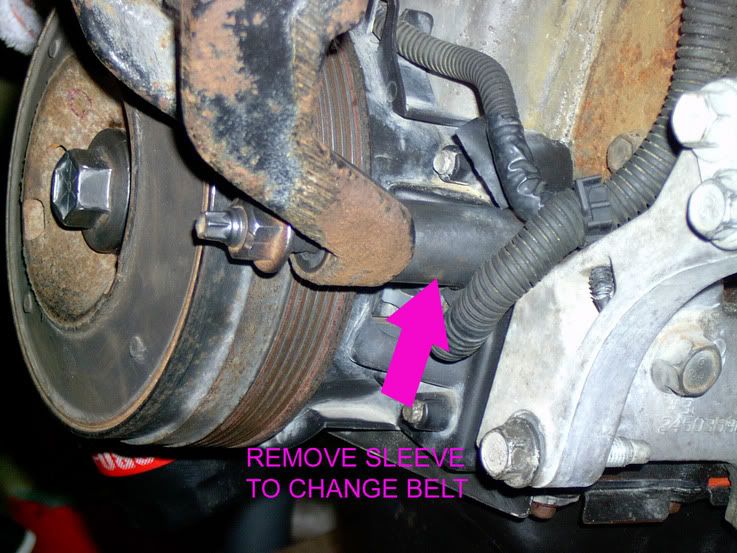
Lay the new belt beside the old one, then pick them both up with your index fingers and pull them tight to make sure the new one is approximately the same size.
Slip the new belt down through the opening where you pulled the spacer and removed the old belt. Route the belt around all but the alternator pulley. Put the 15mm socket and handle on the tensioner pulley bolt and turn counter-clockwise to give room to slip the belt back over the alternator pulley. Release the tensioner. Check the mark on the belt tensioner to make sure it is between the upper three scribed lines indicating maximum tension (top mark) average tension (middle mark) and minimum tension (bottom mark).
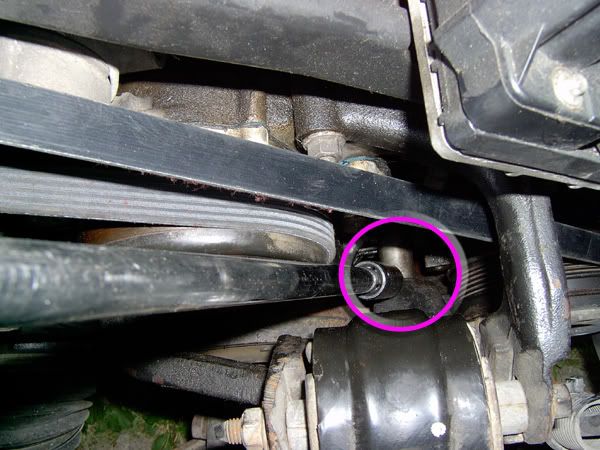
Before you try to put the spacer back in place, check the alignment of the hole in the mount with the hole in the block. Adjust the jack to keep the holes aligned. Here is where it can get tricky. The spacer may not want to go back in between the mount and the block without a little persuasion. Some guys grind a chamfer on an edge of the spacer to help get started. I could almost get the front bottom edge of the spacer over the top of the motor mount, but not quite. I grabbed a long 1/2" drive extension and slipped on a 12mm impact socket. The idea was to find something that would hold against the upper edge of the spacer allowing it to be tapped into place. An appropriately sized piece of pipe would have worked as well. I just fitted the spacer in place above the holes keeping it as close to perpendicular to the block as possible, then gave the "special tool" a whack with a 2-lb hammer. That was enough to pop the end of the spacer past the top edge of the mount. I suppose I could have loosened all the bolts on the mount to achieve the same result, but I was willing to give this a try first, and it worked OK. The picture shows the spacer in place and the approximate position of the "special tool" where I whacked it. The stud can now be replaced and tightened back up, and the jack removed from under the engine. Start the engine and make sure the belt runs OK.
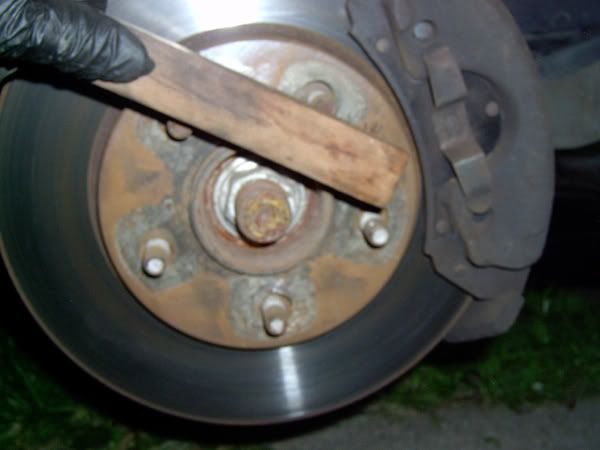
There was rust and corrosion from the wheel stuck to the rotor. If left in place, this can cause your rotors to warp....really! So, the rotor got brushed...
and the wheel got scraped with a heavy duty scraper...
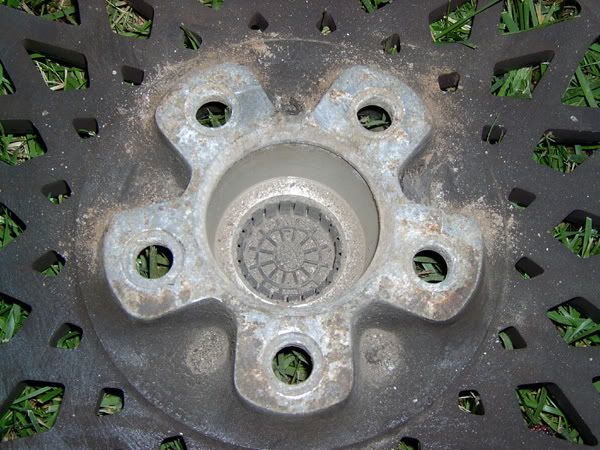
then wire brushed so the mounting surfaces would both be true.
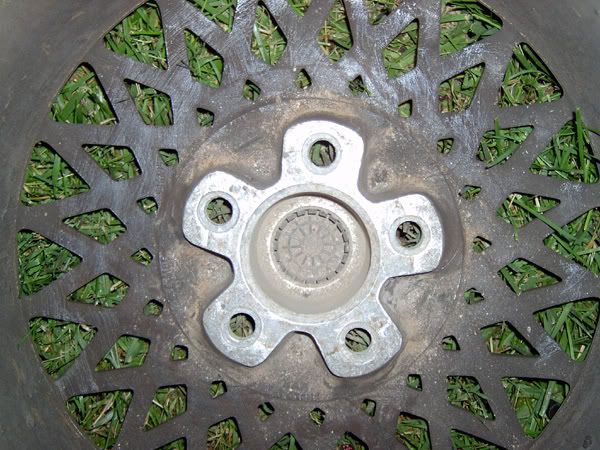
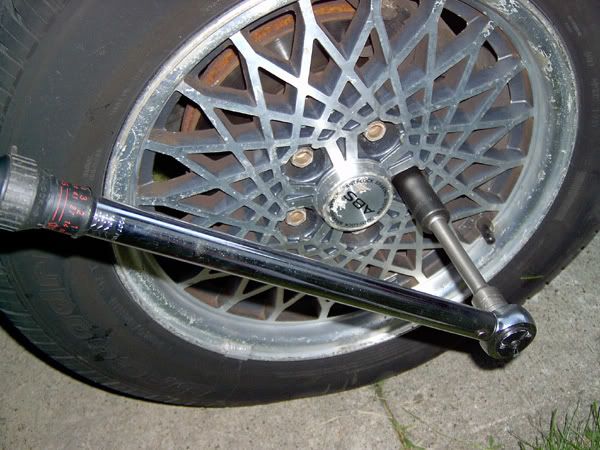
Lug nuts were snugged up. Car was taken off the stand and put back on the wheel. Lug nuts were final torqued to 100 ft-lbs in a star pattern. Replace the lug nut covers. All done.
(Applies to 95-99 L36; 96-99 L67 similar)
Note: This procedure has been revised based on suggestions received in this topic and further testing. The revised version is posted in Techinfo: http://www.pontiacbonnevilleclub.com/fo ... =53&t=2652
If your accessory belt looks like this or worse:
You will need to remove the old belt and install a new one. On most cars, this is a simple job, but on the Series II 3800, there is a spacer that must be removed from the lower bolt on the front motor mount to allow the belt to be removed or installed. Figure on about an hour to get the belt changed if you have never done it before. Probably thirty minutes the second time around.
Tools you need to do the job include:
a jack
a jackstand
a piece of 2x4 for oil pan
15mm socket for tensioner
18mm socket for motor mount
19mm (3/4") socket for lug nuts and covers
socket handle
pliers
a 12mm socket with a very long extension or
an appropriately sized piece of pipe
2-4lb hammer
torque wrench for lug nuts
If your wheel and rotor are corroded, you will also need:
a wire brush
a sturdy scraper
The first thing you want to do is make sure you have a belt routing diagram. If you don't have a sticker in your engine compartment, just draw one up by looking at the belt on the engine and store it in a convenient place where you will not be likely to lose it.
Loosen the old belt by placing a 15mm wrench on the tensioner bolt (big arrow) It helps to have a nice long handle to provide some leverage. Note the position of the tension indicator (little arrow).
Turn the wrench counter-clockwise to remove tension on the belt...
then just slip the belt off the alternator pulley.
Now, remove the lug nut covers if your wheels have 'em. I need a 3/4" wrench for mine.
Then loosen the lug nuts.
Now jack up the car...
and support it safely. Then remove the wheel.
Use pliers or side cutters carefully to pull out the center button on the 3 plastic retainers for the engine shield.
Don't miss this retainer up under the front of the fender.
Swing the engine shield out of the way. This will expose the stud that must be removed to slip out the spacer allowing you to remove and install the belt.
On my car, the stud is secured by an 18mm nut rusted tightly to the stud. If your nut comes off leaving the stud in the block, you will need the external torx socket to remove the stud. However, don't remove the stud until....
you have supported the engine with a jack. Use a piece of 2x4 on the jack pad so you don't dent the oil pan. Just bring the jack up snug. Then remove the stud. This will free the spacer. Wiggle the spacer up as far as it will go, then jerk it out lifting the outer end. With the spacer out, you can pull out the old belt.
Here is another photo of the spacer with the engine on a stand.
Lay the new belt beside the old one, then pick them both up with your index fingers and pull them tight to make sure the new one is approximately the same size.
Slip the new belt down through the opening where you pulled the spacer and removed the old belt. Route the belt around all but the alternator pulley. Put the 15mm socket and handle on the tensioner pulley bolt and turn counter-clockwise to give room to slip the belt back over the alternator pulley. Release the tensioner. Check the mark on the belt tensioner to make sure it is between the upper three scribed lines indicating maximum tension (top mark) average tension (middle mark) and minimum tension (bottom mark).
Before you try to put the spacer back in place, check the alignment of the hole in the mount with the hole in the block. Adjust the jack to keep the holes aligned. Here is where it can get tricky. The spacer may not want to go back in between the mount and the block without a little persuasion. Some guys grind a chamfer on an edge of the spacer to help get started. I could almost get the front bottom edge of the spacer over the top of the motor mount, but not quite. I grabbed a long 1/2" drive extension and slipped on a 12mm impact socket. The idea was to find something that would hold against the upper edge of the spacer allowing it to be tapped into place. An appropriately sized piece of pipe would have worked as well. I just fitted the spacer in place above the holes keeping it as close to perpendicular to the block as possible, then gave the "special tool" a whack with a 2-lb hammer. That was enough to pop the end of the spacer past the top edge of the mount. I suppose I could have loosened all the bolts on the mount to achieve the same result, but I was willing to give this a try first, and it worked OK. The picture shows the spacer in place and the approximate position of the "special tool" where I whacked it. The stud can now be replaced and tightened back up, and the jack removed from under the engine. Start the engine and make sure the belt runs OK.
There was rust and corrosion from the wheel stuck to the rotor. If left in place, this can cause your rotors to warp....really! So, the rotor got brushed...
and the wheel got scraped with a heavy duty scraper...
then wire brushed so the mounting surfaces would both be true.
Lug nuts were snugged up. Car was taken off the stand and put back on the wheel. Lug nuts were final torqued to 100 ft-lbs in a star pattern. Replace the lug nut covers. All done.
 For those running a Olds, I was able to pull the motor mount bolt and spacer without having to remove the wheel or jack up the motor, 'bout a 20 minute job. I wouldn't think a '95 Bonnie would be that much different in engine mounting than a "95 Olds, but after looking at your pictures, it looks like I had more room to work.


