Originally Posted: Jan 02, 2007
Picking up where I left off... Timing chain cover comes off next.
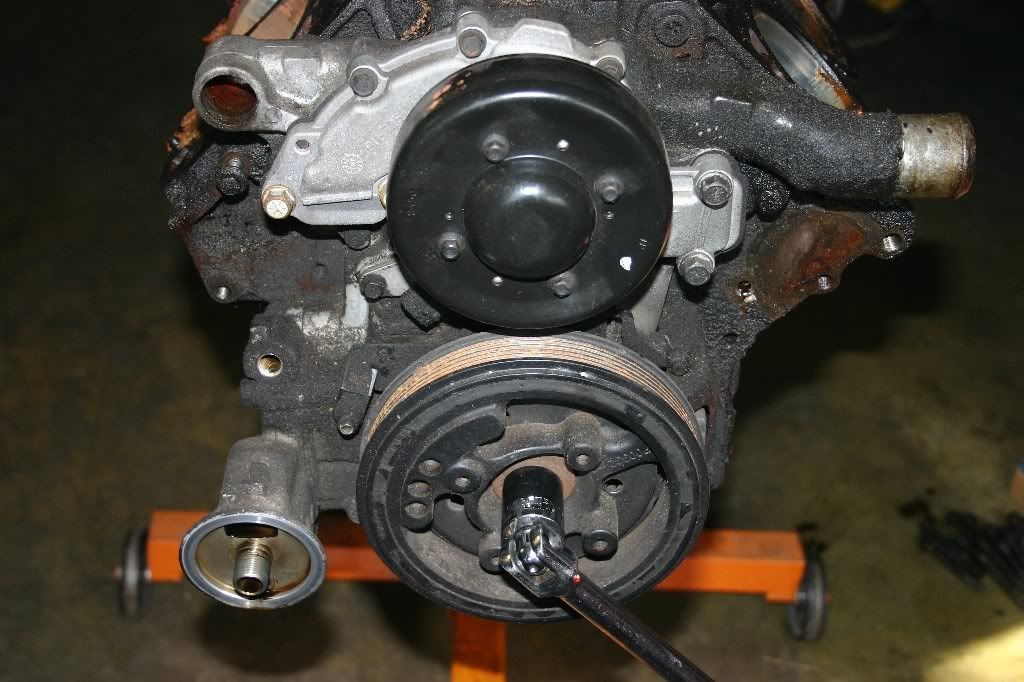
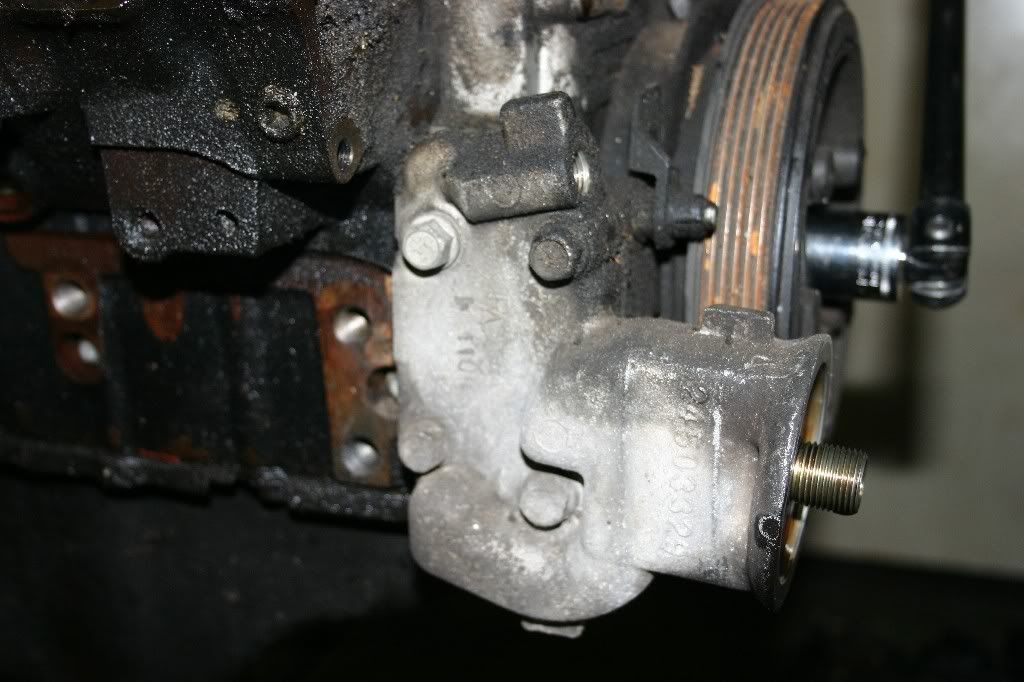
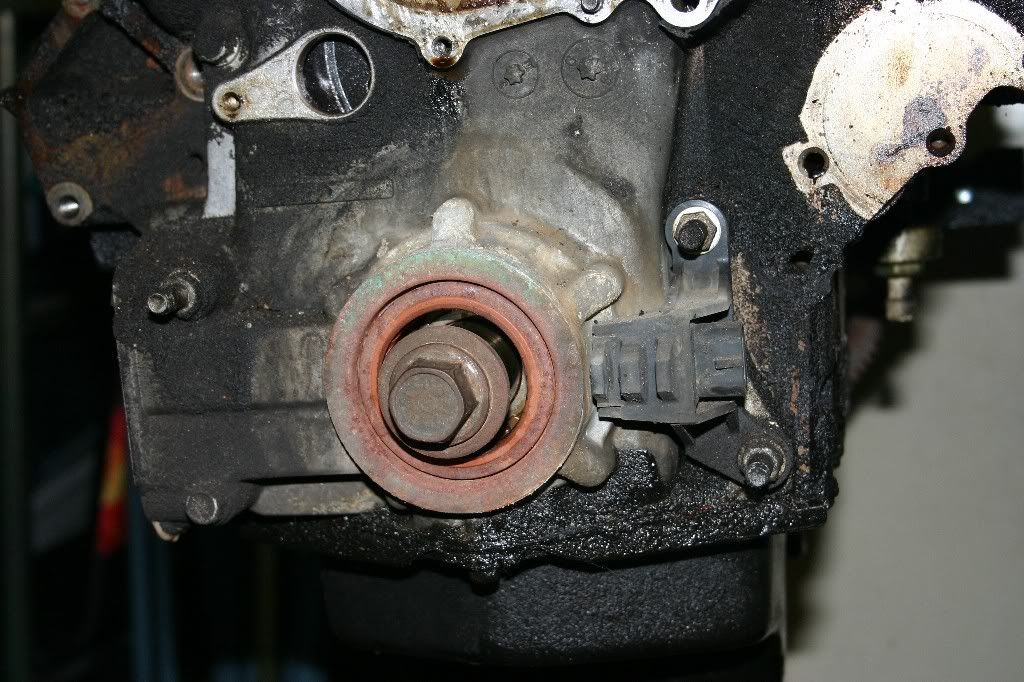
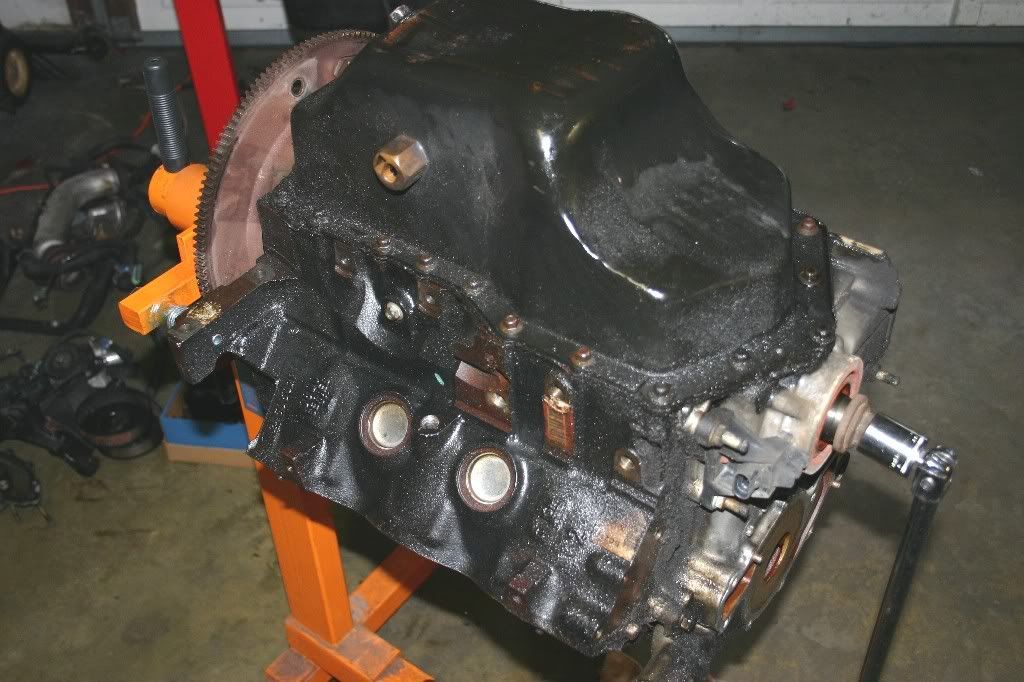
Before removing it, I want to take a measurement of the crank position sensor for future reference. With one photo, I have all me measurements for comparison purposes later.
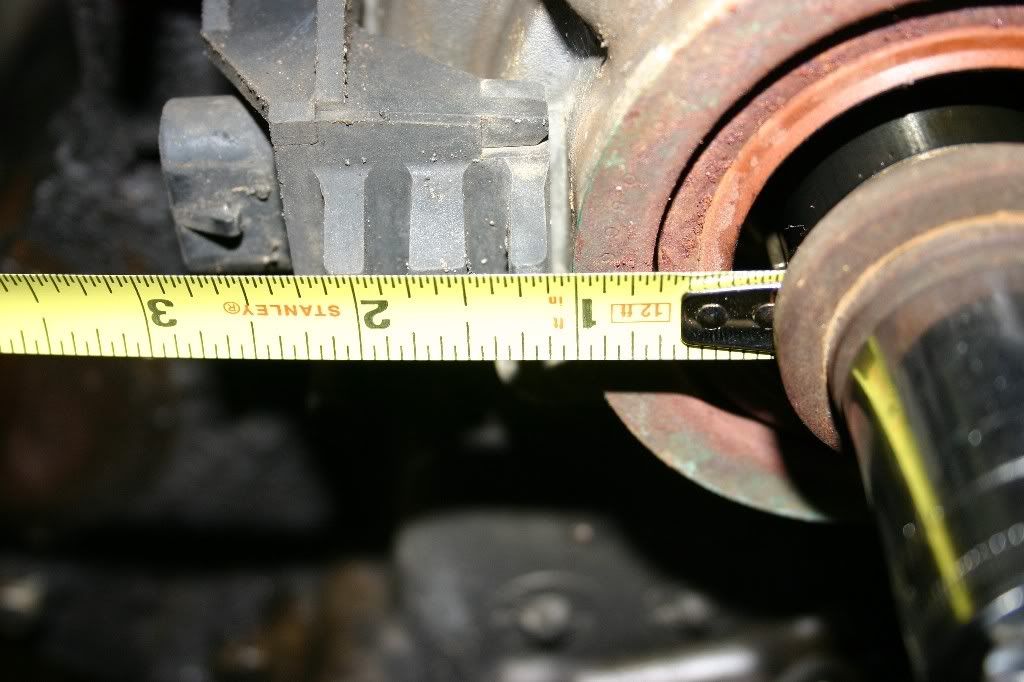
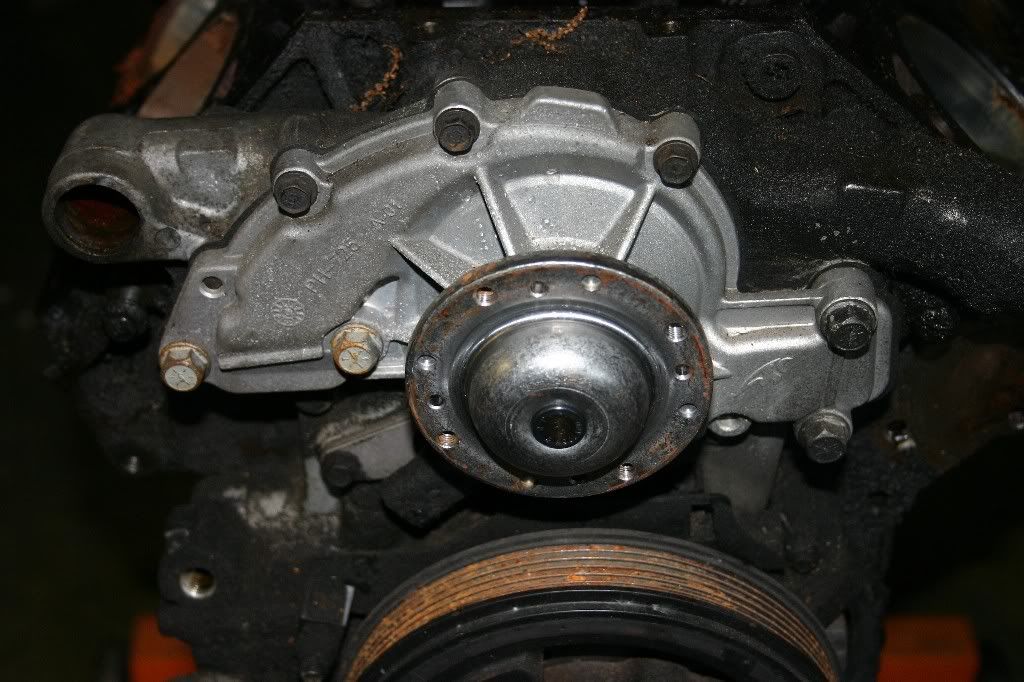
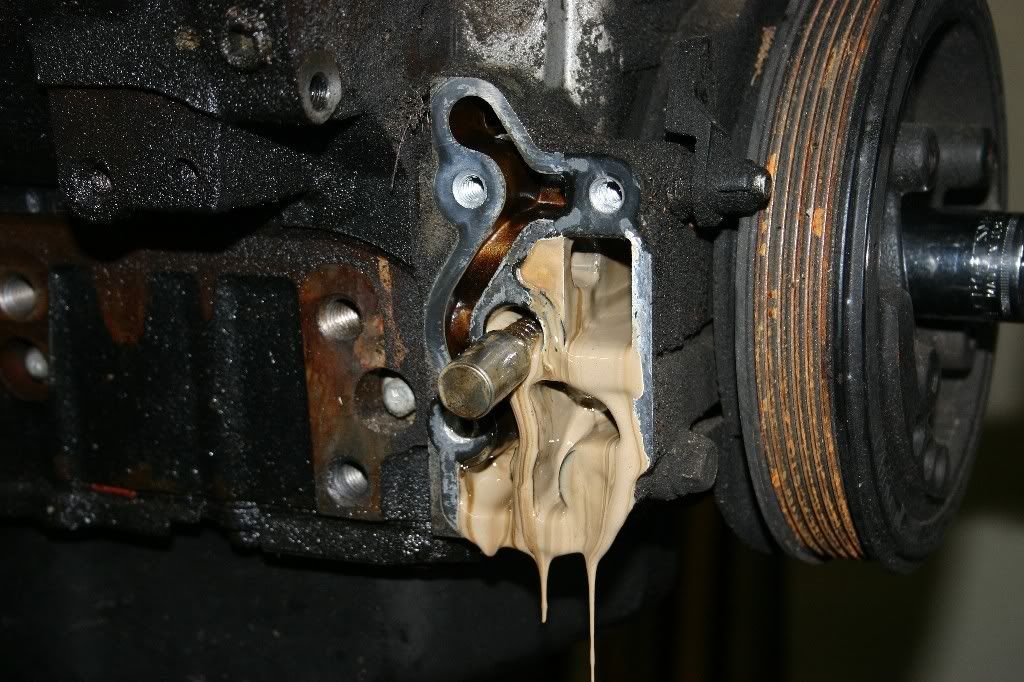
Now, for the timing cover and oil-pump assembly. Take off the crank position sensor and all of the exposed bolts (Six total)
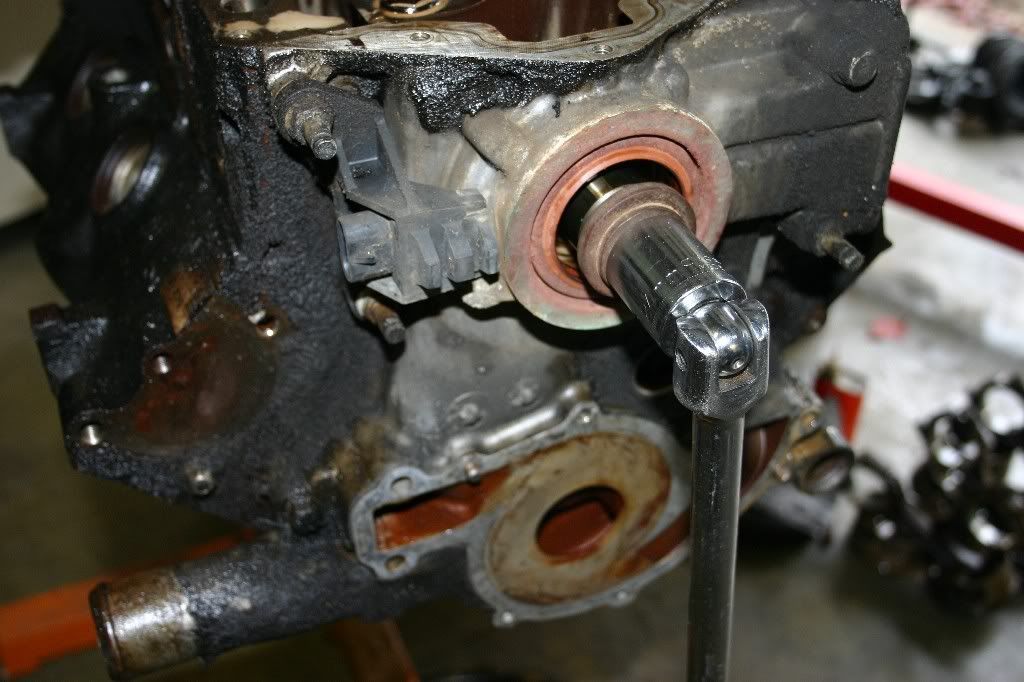
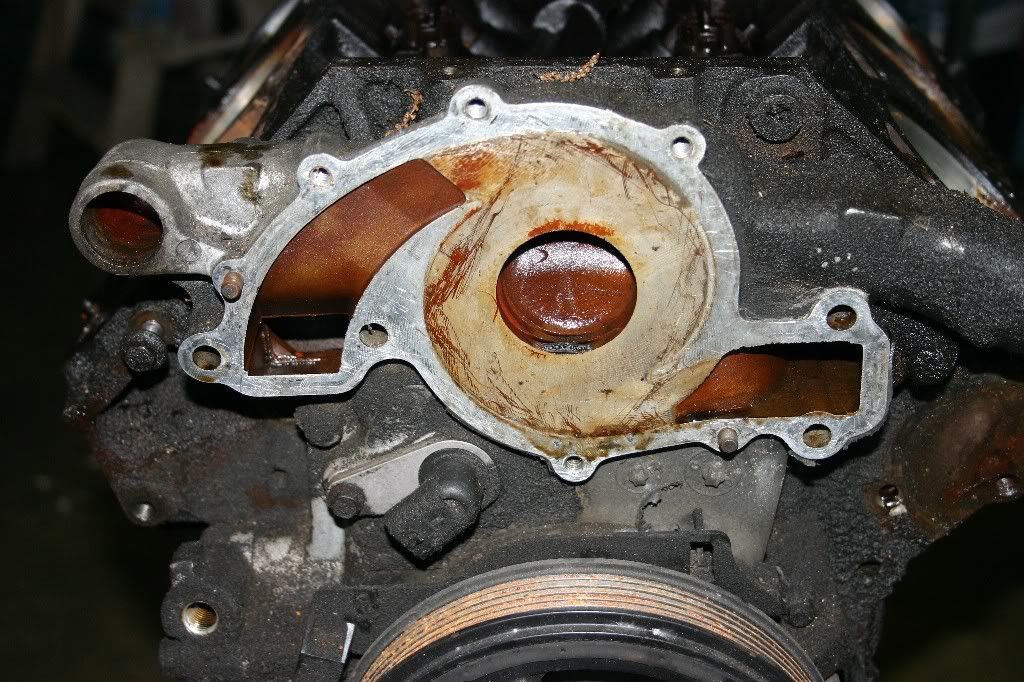
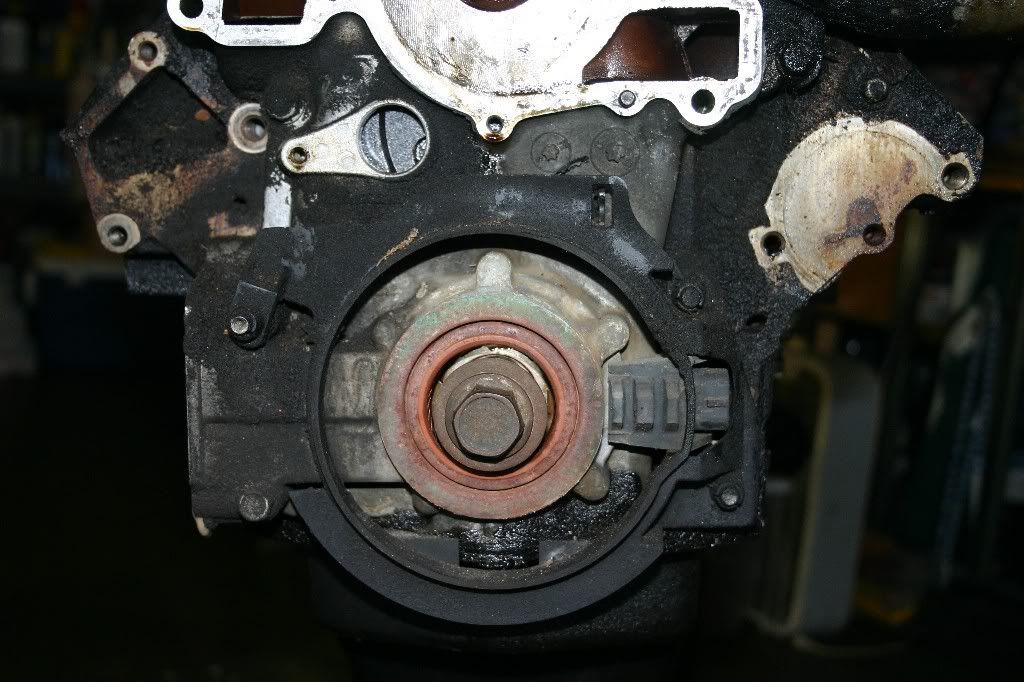
With a few taps of a rubber mallet, the timing cover and oil pup will come off the face of the block.
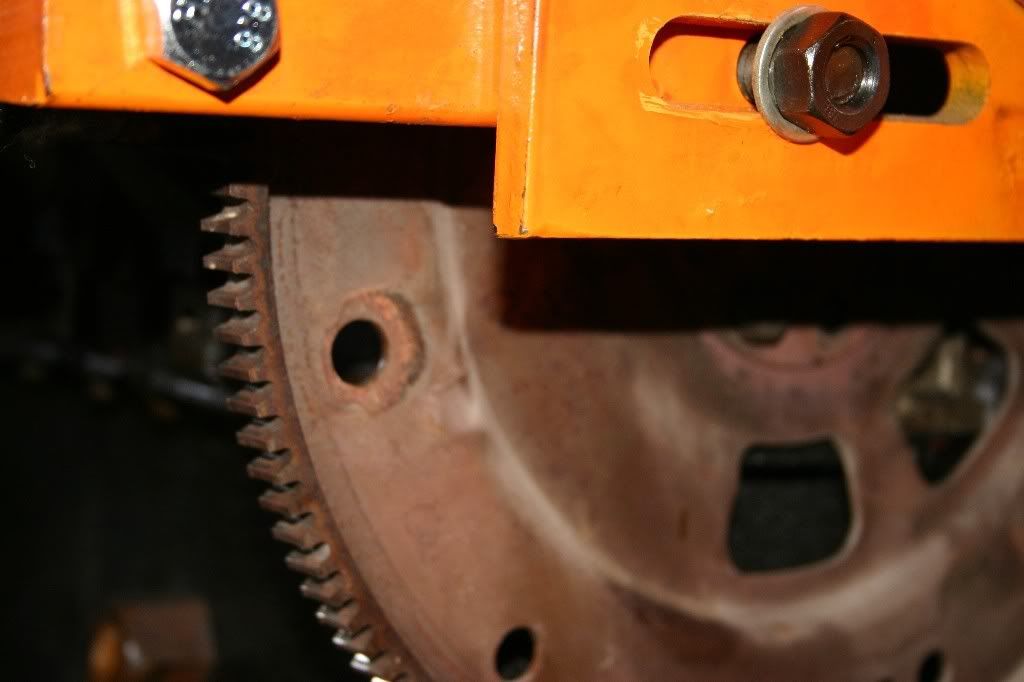
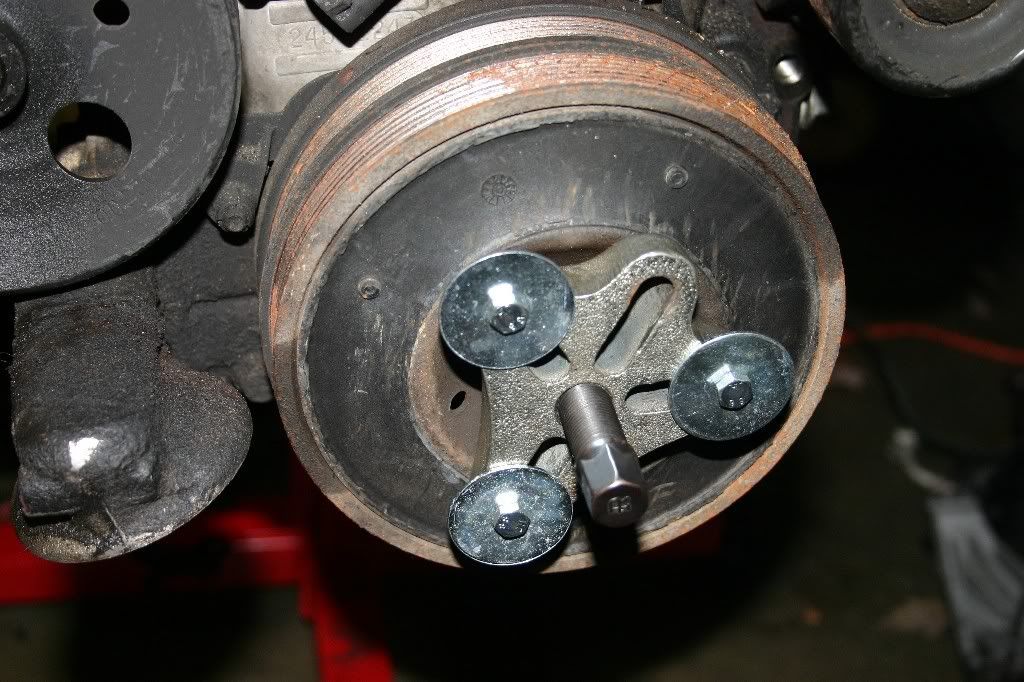
Now, we need to loosen the cam retainer bolts to remove the timing chain and tensioner. This is another really tight bolt, so just like removing the balancer bolt, I'm locking the crank in place using the flex plate at the other end.
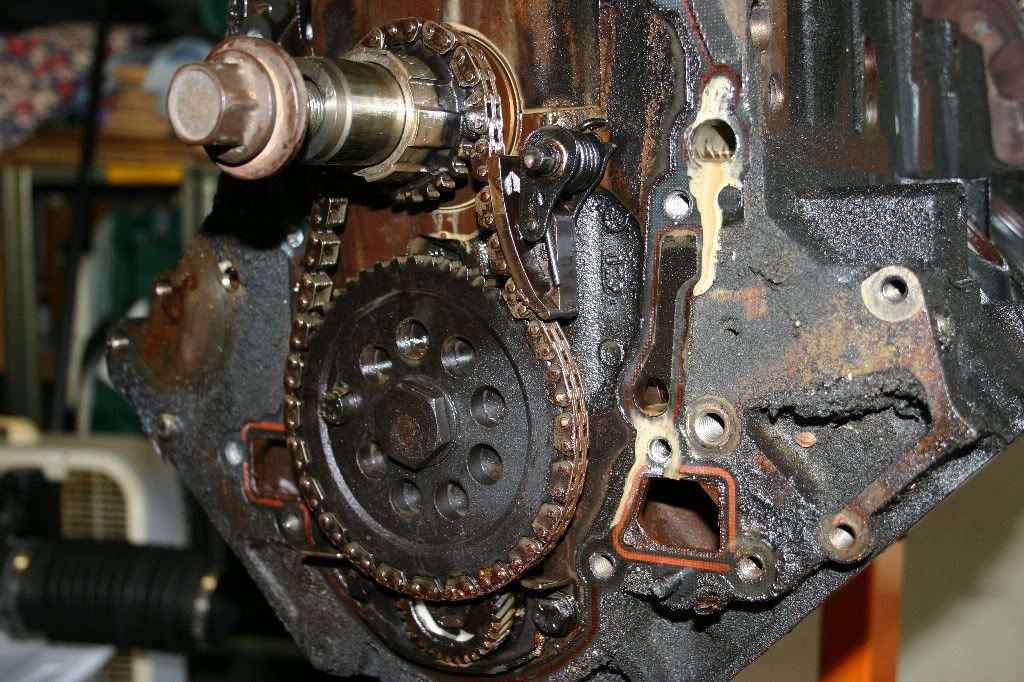
With the timing chain off, the oil-pump drive and other bits can come out. The tensioner is another discard item. The shoe of it wears down in contact with the timing chain and should be replaced if it has a visible track worn into it. The timing chain itself is a maybe item, it needs to be inspected and measured along with the drive gears to see if they warrant replacement. Note, I am not removing the camshaft at this time...it will be a lot easier to remove in a few minutes.
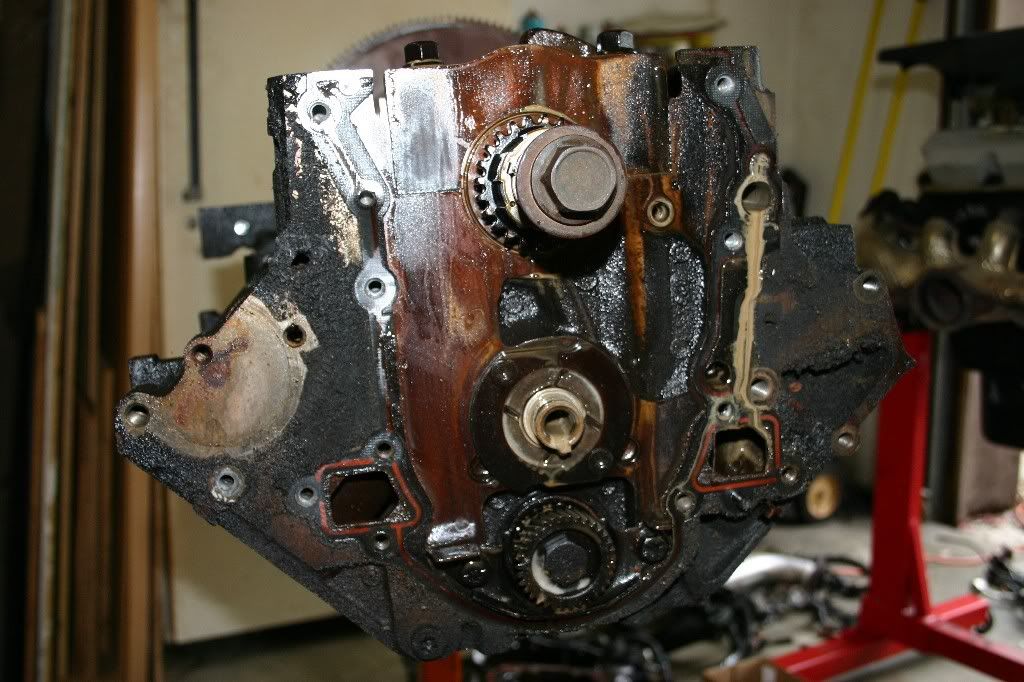
Ok, front cover is done, time to attack the rear cover. Remove the 10mm head bolts and pry the cover off (it's glued on with a paper gasket and some adhesive in addition to the bolts.)
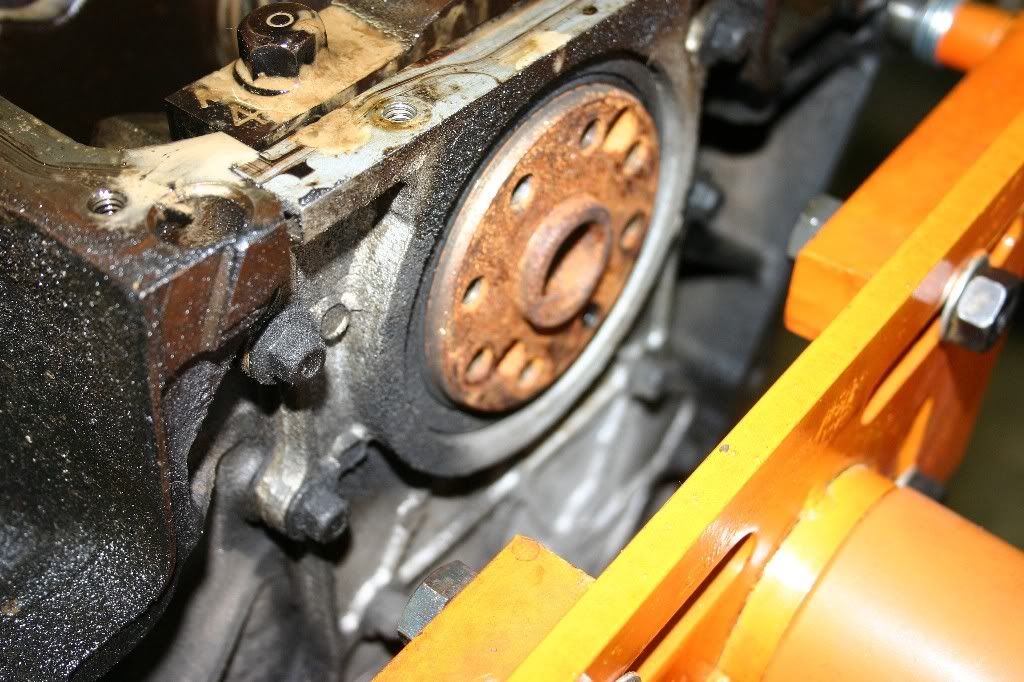
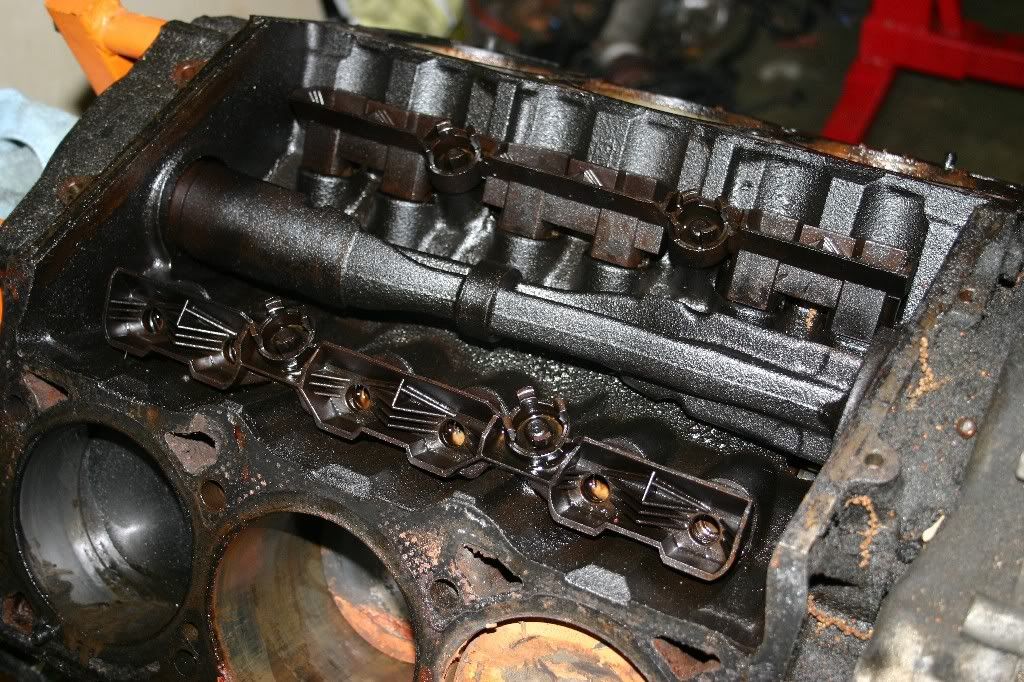
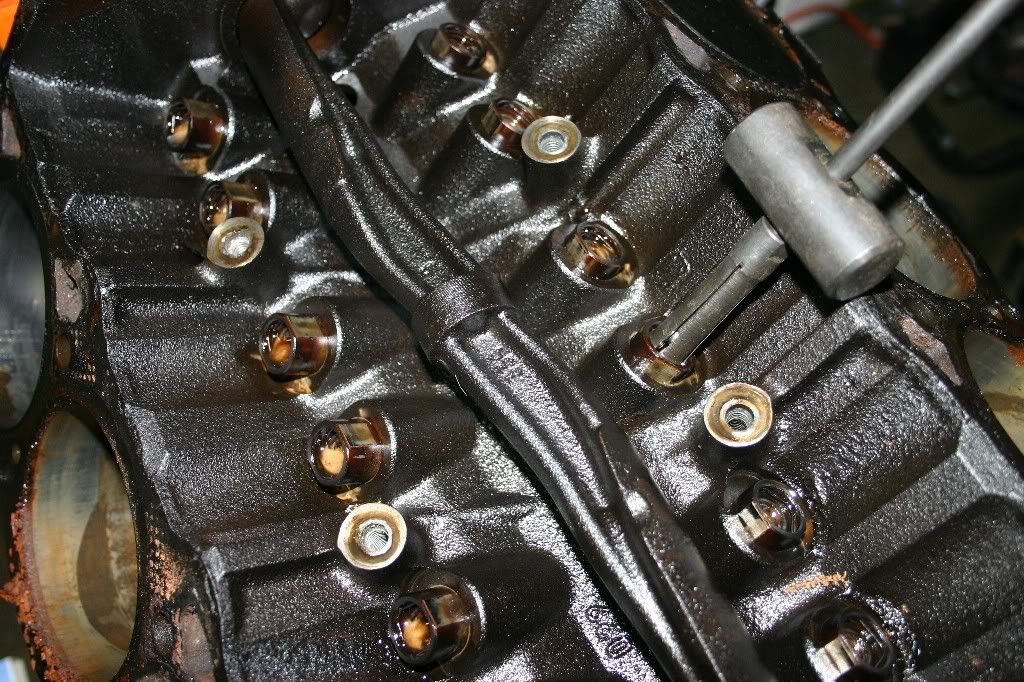
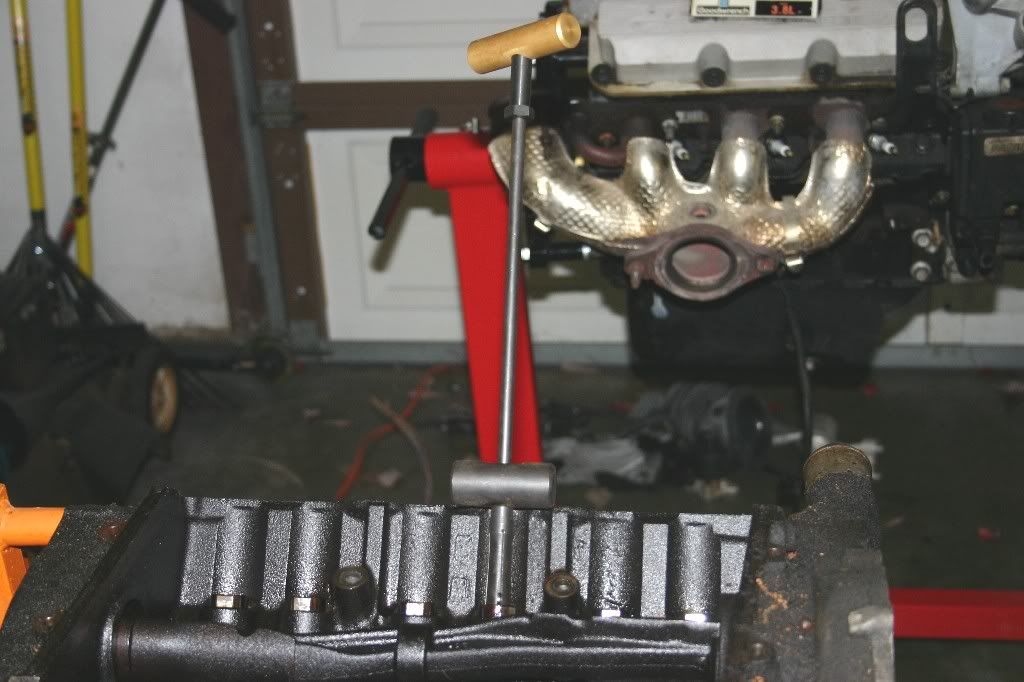
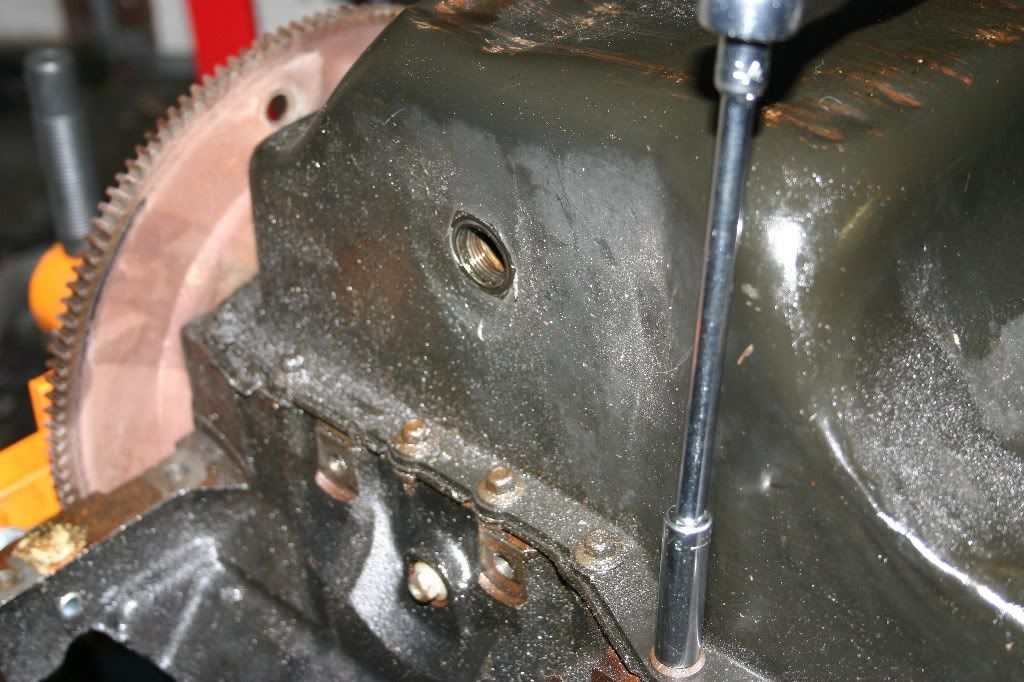
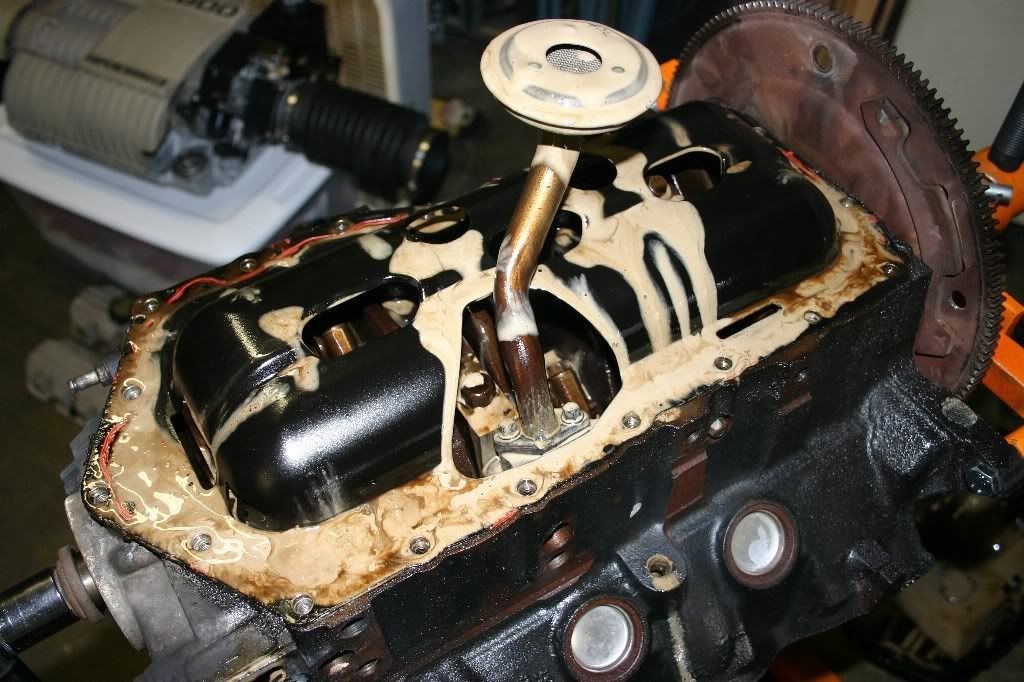
Now, with front and rear covers removed, time to remove the girdle bolts for the main caps. There are six of them in pockets machined in the oil pan rail. (three per side) with 10mm heads and they are all the same size.
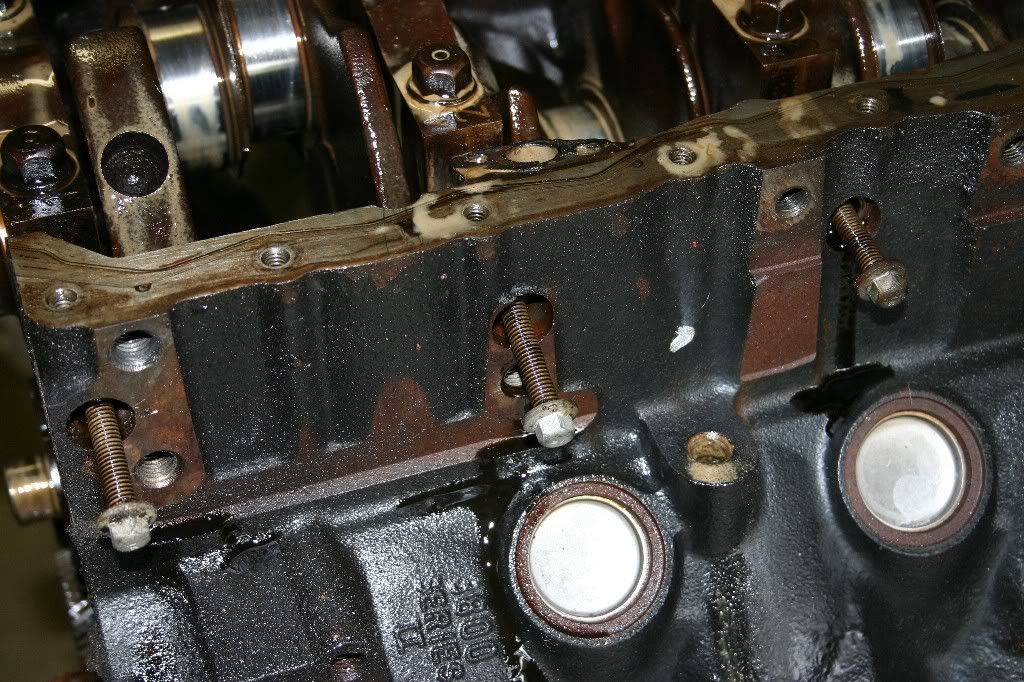
With the girdle bolts out, you can loosen the main journal bolts in preparation for removing the main caps. Word of caution, they are torqued pretty tight. Use a long breaker bar as well as position your hands to pull on the wrench while pushing on the block. If you are not careful, you can easily pull the whole motor and engine stand over and have it land on top of you. (not fun, it still weights about 100lbs at this point.)
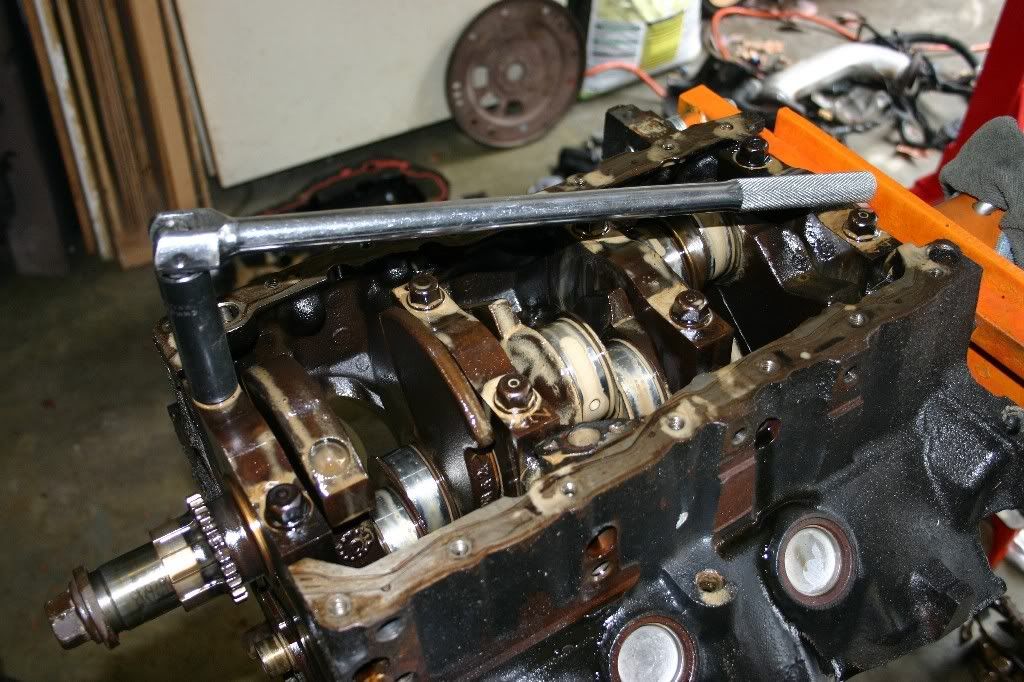
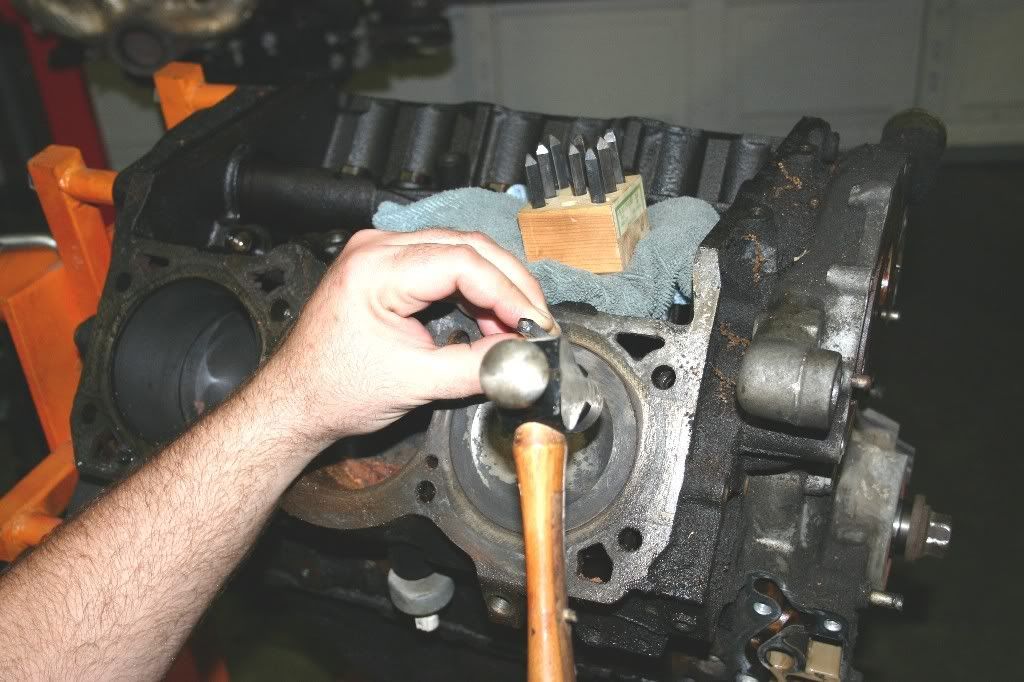
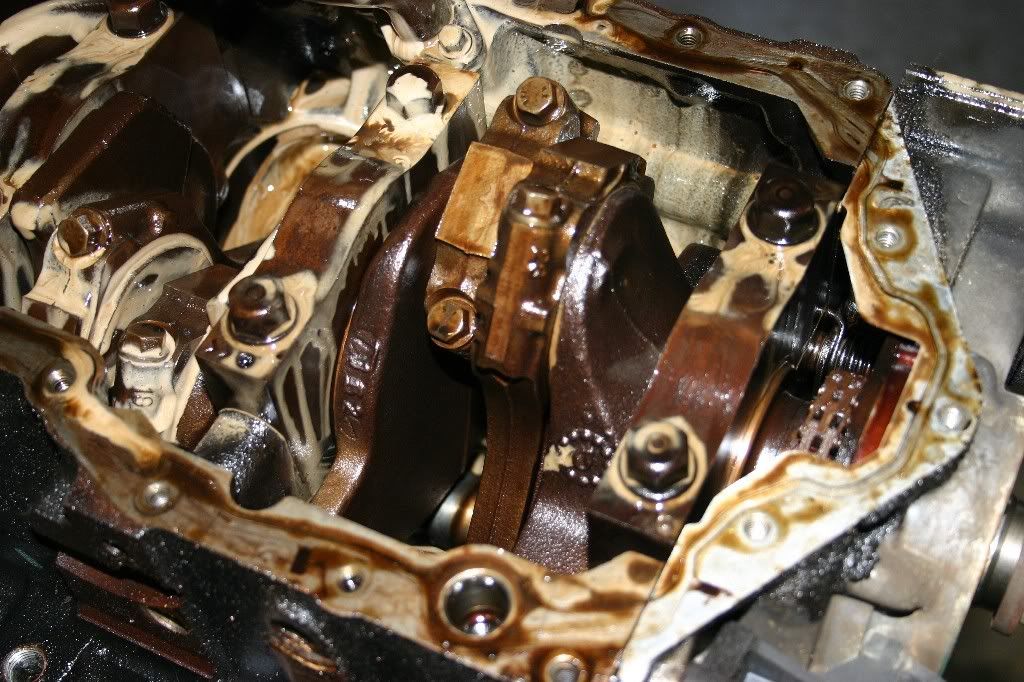
Now, Here's all the main caps loose and ready for the next step. There's a special tool for removing the main caps on the 3800 motor. It's a special jig that fits into the main cap bolt holes, grips them, and pushes on the oil pan rails to extract the caps out of the block. I don't have one, but a James pointed out, there's an alternative way. With the cap bolts loose, but still threaded into the block, turn the block right side up and tap on the crank with a block of wood and a mallet. Gravity will do the rest. Don't be in a hurry, tap a little on the crank nose, then the flex plate end, then slip the block into the cylinder bores and tap on the counter-weights inside the block. Resist the temptation of slipping a screwdriver into the gap between the block and caps, you’ll screw up the machined surfaces. When you have the caps most of the way out, turn the motor on the engine stand back to upside-down and finish removing the bolts, caps, bearing shells, and crank.
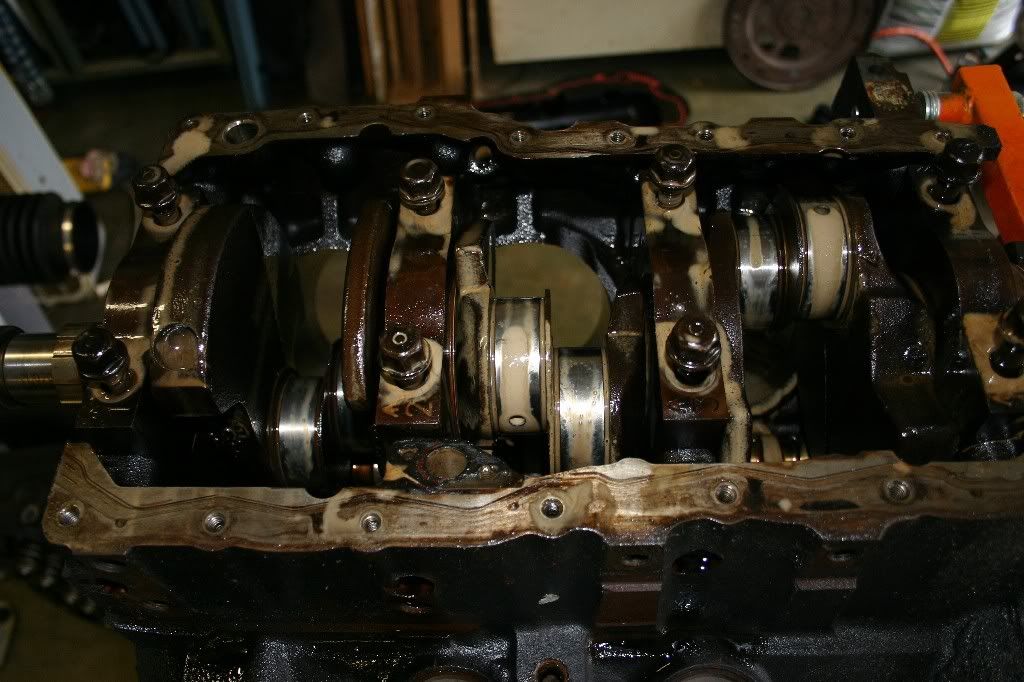
Crank is out. Looking at the underside of the motor, we can see the camshaft. Now is the time to remove it. Turn the motor back over and stick a hand up inside to support the part of the cam inside the block while pulling it out with the other hand. Don't be in a hurry, you have to work the cam lobes past three camshaft bearings. I know the cam bearings are trash, but if they were to be reused, the last thing you would want is a nice big scratch in them from a cam lobe.
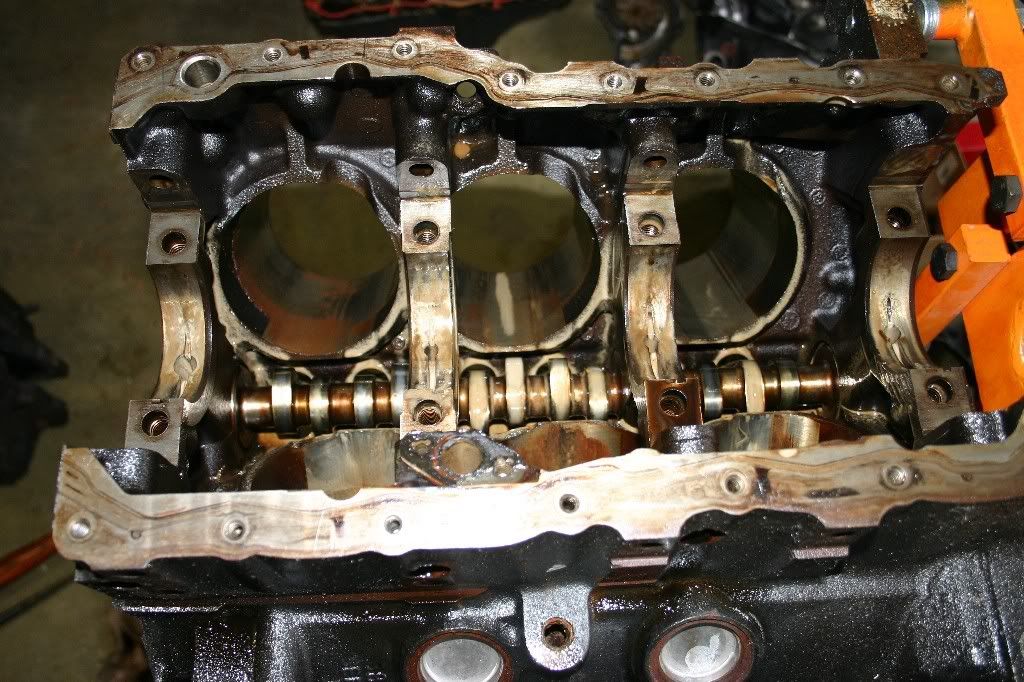
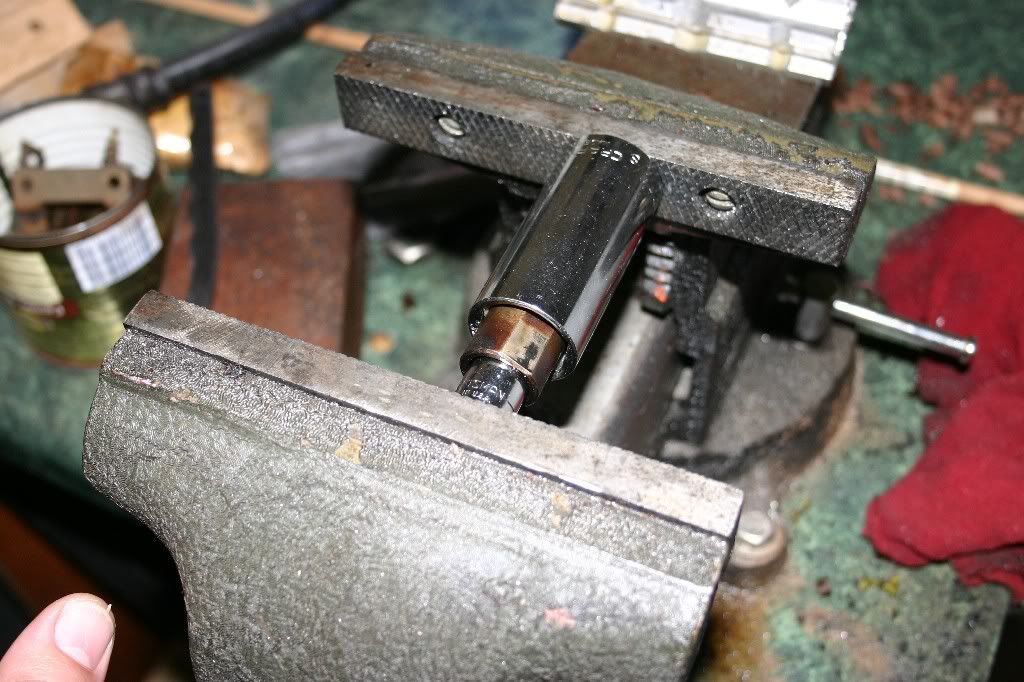
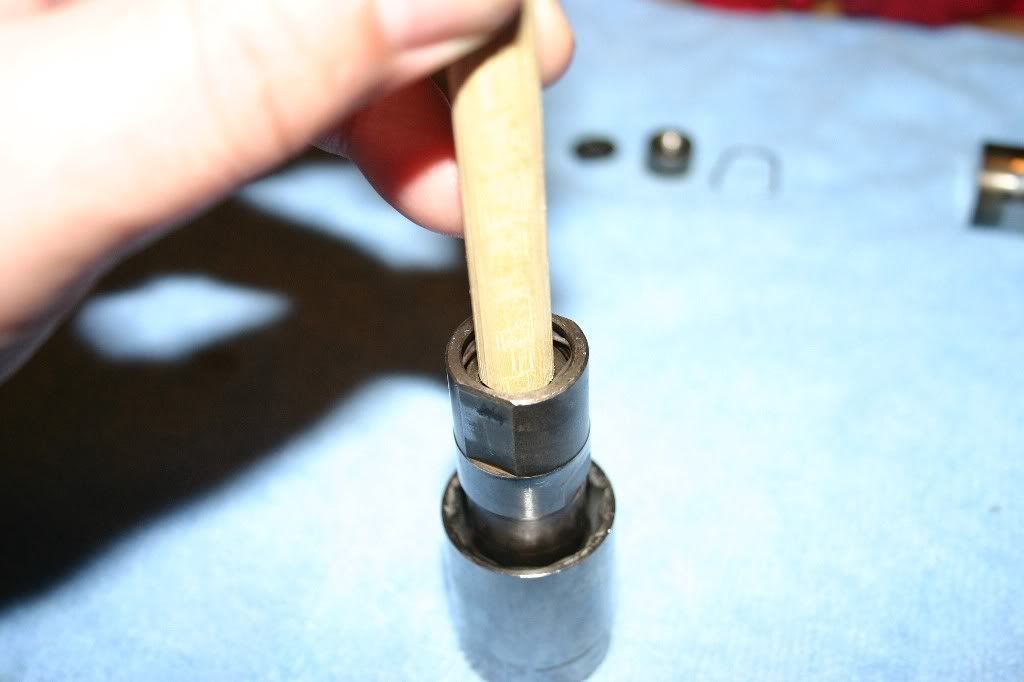
While I didn't photograph it, the balancer shaft comes out easily. Take out the two bolts and steel retainer on the timing cover end of the motor. Then, using a deep socket, drive the balancer out of the block from the bell-housing end towards the front of the motor. Couple of taps will unseat the ball bearings and their race out of the pocket in the front of the motor, then the balancer can be slid out of the block.
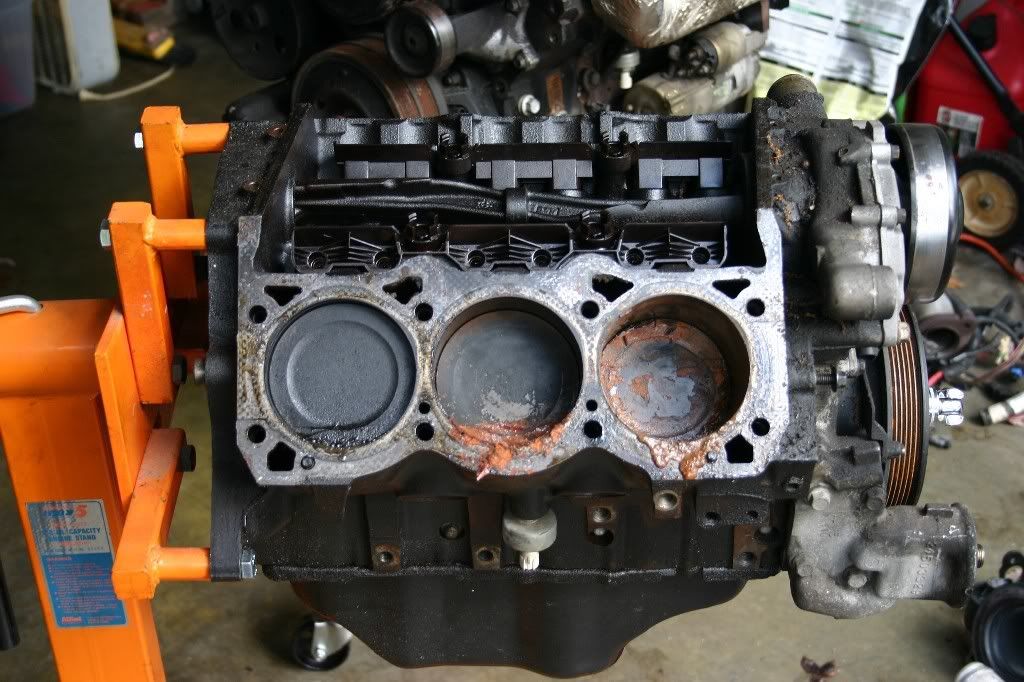
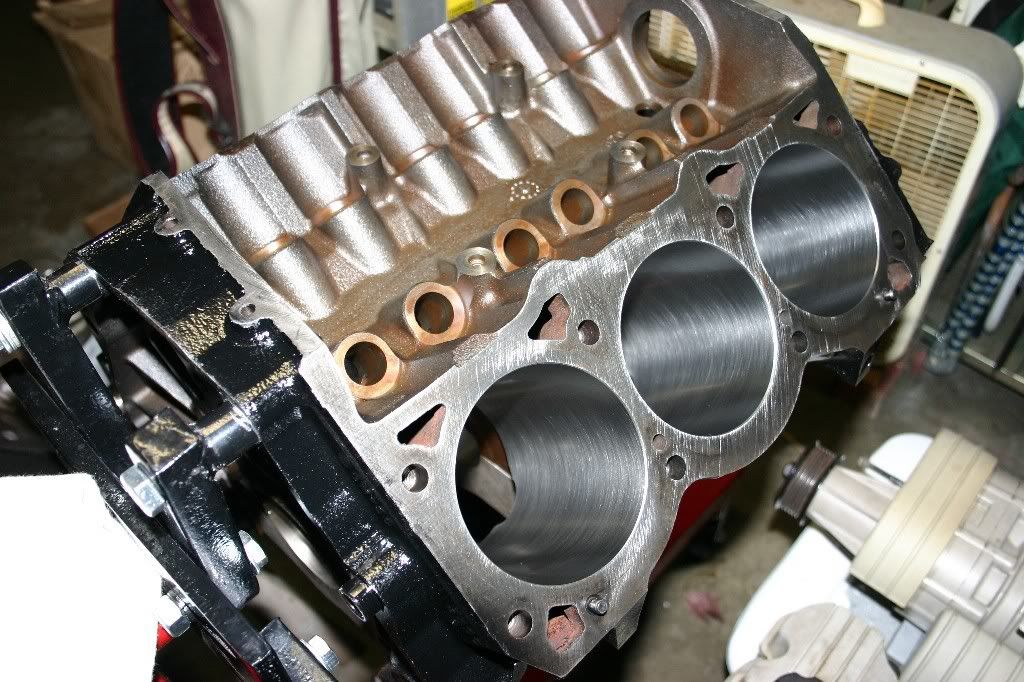
That brings us all the way down to a bare block and a big pile of parts.
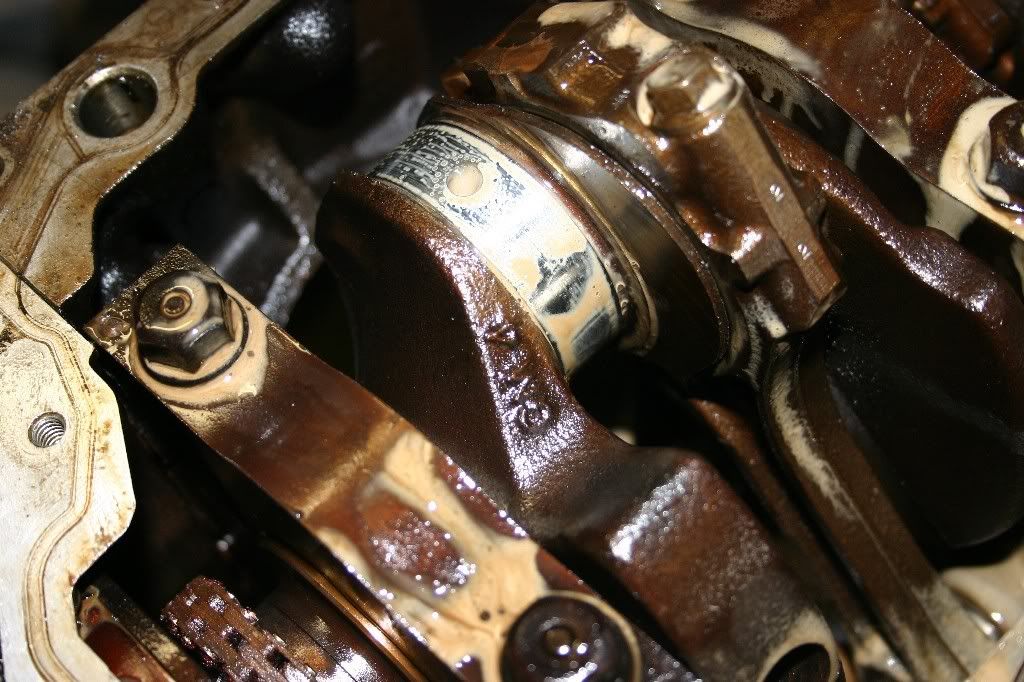
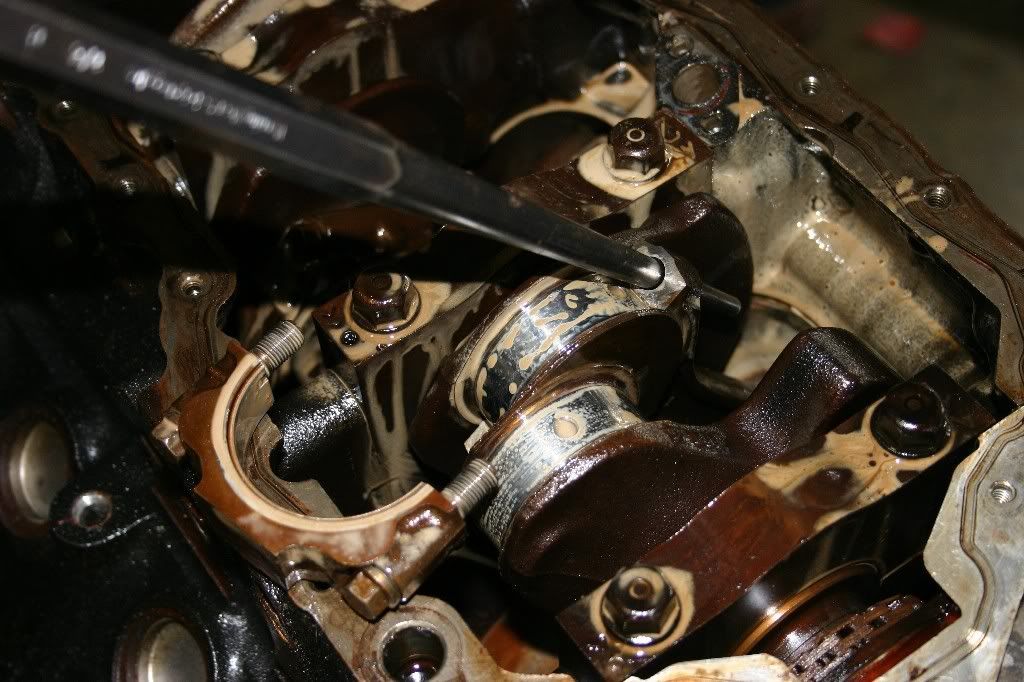
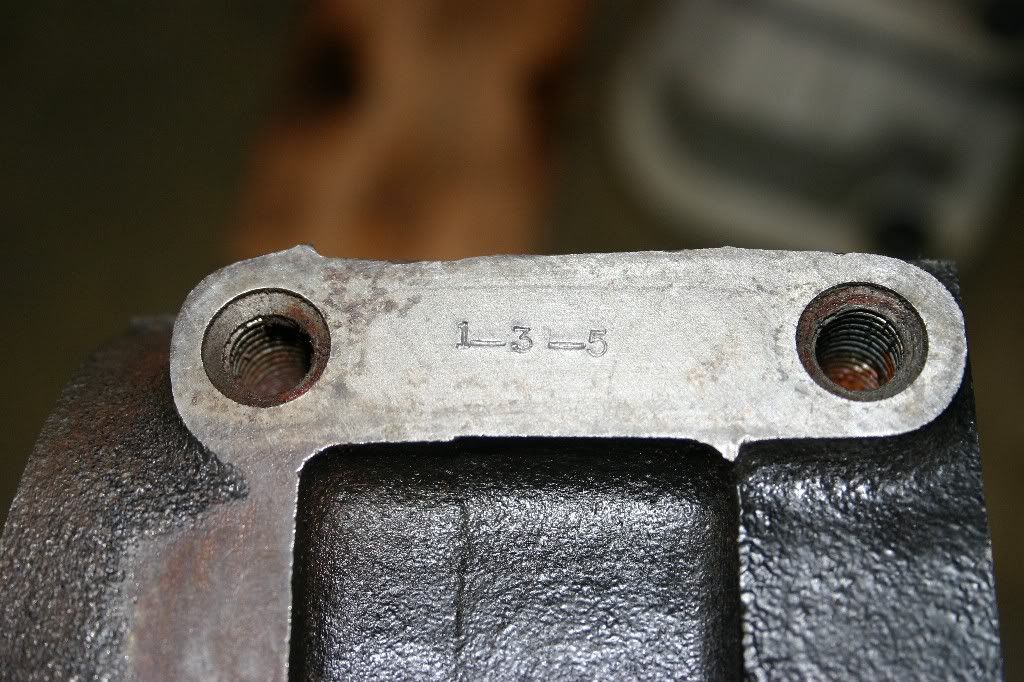
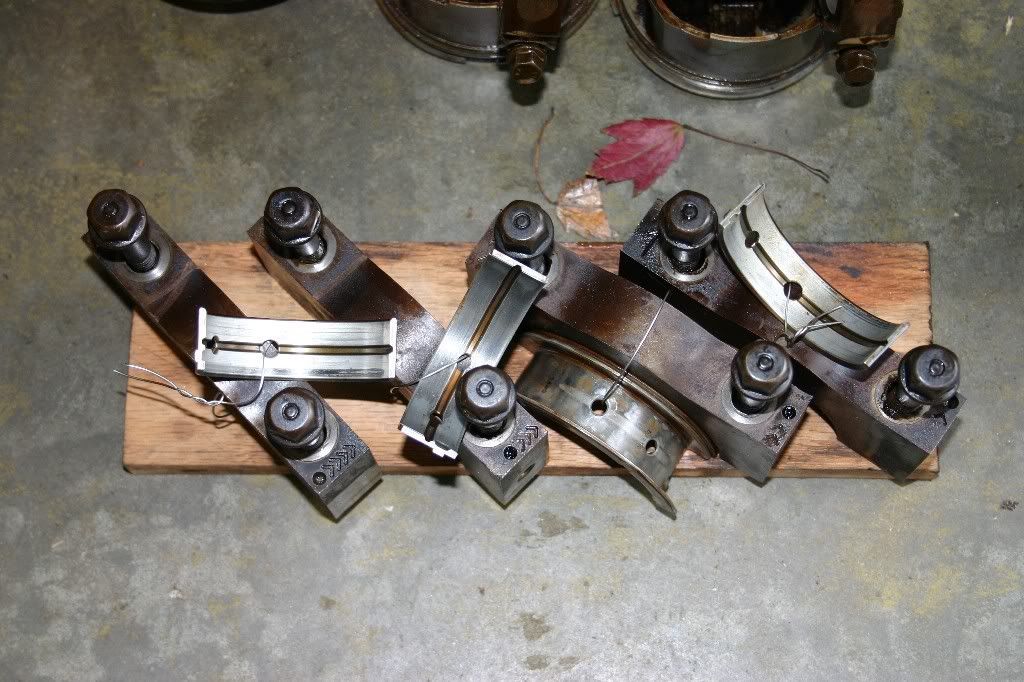
Here's the main caps and their bearings. They actually don't look too bad. A little material is impacted into the surface of a few of them, but otherwise they would be considered serviceable as-is. Note, I didn't stamp numbers into them like the rods. Normally you would do this, but GM did the work for you. Each cap is marked with the number of the journal it was fitted to, along with an arrow to indicate which way it goes in during reassembly.
With all this done, the next phase is cleaning all the parts up. The block will need a lot of attention, so it is going straight to the machine shop to be hot-tanked and new cam bearings installed (The caustic cleaning process dissolves the bearings, so it is normal procedure to put new ones in and the shop will do it for me.)
That also brings up dealing with a machine shop.
1.) Never be in a hurry and Never put a time constraint on them. You don't want sloppy work and if you are clear that you are in no hurry, they will usually do a better job. You also get little freebies...like they might leave your block in the cleaning tank over the weekend for that really "squeaky-clean" block.
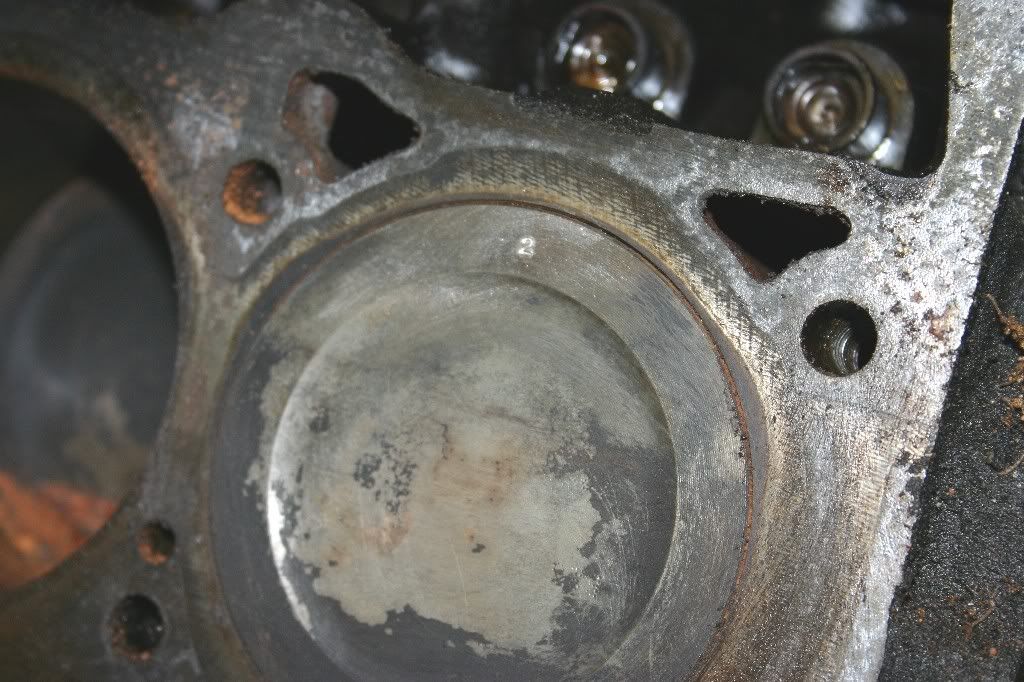
2.) Ask their advice and listen closely when they give it. Nothing pisses a machinist off more than being told their trade. I usually give them a general idea what I'm planning and ask them to check the block over to see if it is possible as well as hear their advice. On this block, I'm going to ask him to take a really good look at #2 cylinder. If it needs an overbore, it's going to get an overbore and the other cylinders will get one too.
3.) Bring cash. Yep, most prefer the currency of the realm and hate deadbeats as much as the rest of us.
Bye Bye 1990 Bonneville LE... Now it belongs to my daughter
In the Garage: 2009 Subaru Outback, 1987 Camaro, 2006 SV650S, 1995 Regal 182 "ASANAGI", 1962 Ford Galaxie 500, 1995 Ford F150 XL 4WD, 1953 Farmall Cub